2007: a book could arrive without a computer
Amazon introduced Kindle on November 19, 2007. The central promise was a portable electronic-paper reader that could download reading material wirelessly. Amazon’s later retrospective describes a launch catalog of90,000books and says the device sold out in5.5hours. That indicates launch demand, but does not reveal how many units were available.
The important workflow was getting someone else’s words onto your screen. A reader could obtain a book without first moving it through a computer.
2026: the page is also a workspace
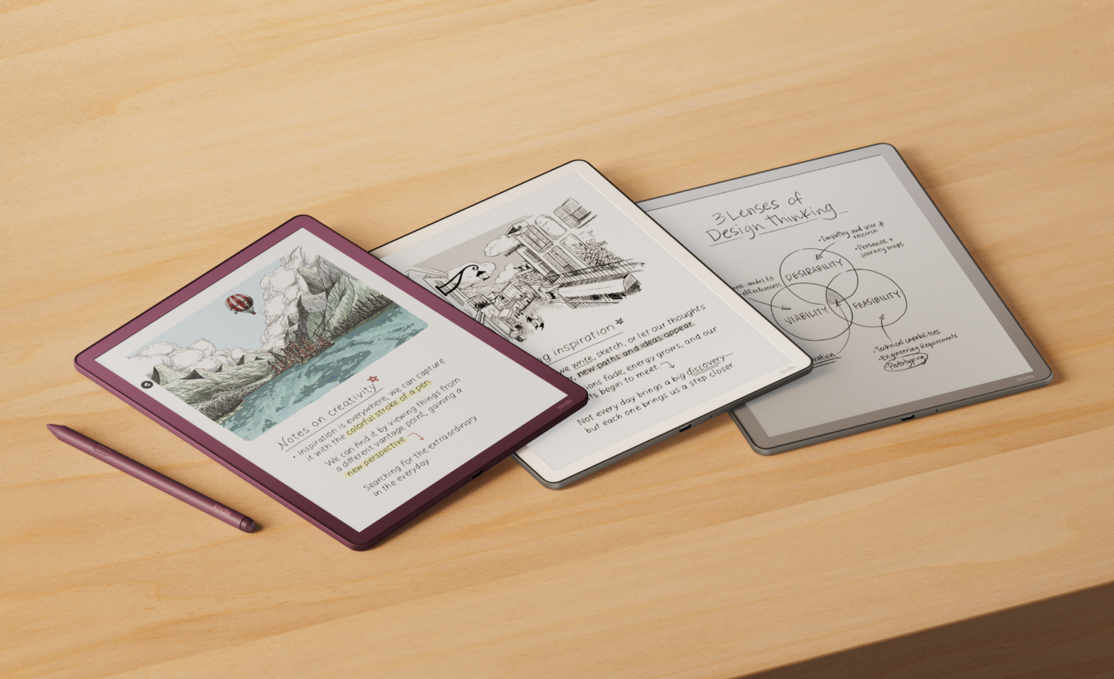
Amazon’s May2026Australian announcement describes a redesigned Scribe lineup, including Scribe Colorsoft. It highlights an11-inch display, pen input, document markup and notebook features. Its listed workflows include importing documents from Google Drive or OneDrive and exporting annotated PDFs.
Color adds another distinction: handwritten annotations and highlights can carry visual meaning. This is a comparison with the original Kindle concept, not a claim that writing or color first appeared across all e-readers in2026. The image shows the modern lineup, not the2007reader.
Choose by the job, not the generation
A useful purchasing question is whether you primarily consume books or work on documents. If your routine is mostly reading novels, the added writing surface may solve little. If you annotate drafts and keep handwritten notes, the ability to get documents in and edited material back out matters much more.
Before upgrading, follow one real document through that complete route. Check its layout, your annotations and the exported result. That gives you a more useful comparison than treating every newer feature as a reason to replace an existing reader.
Source published 2007-11-19. Coverage is based on the maker’s announcement and demonstration.