Six different ways to use a learned world
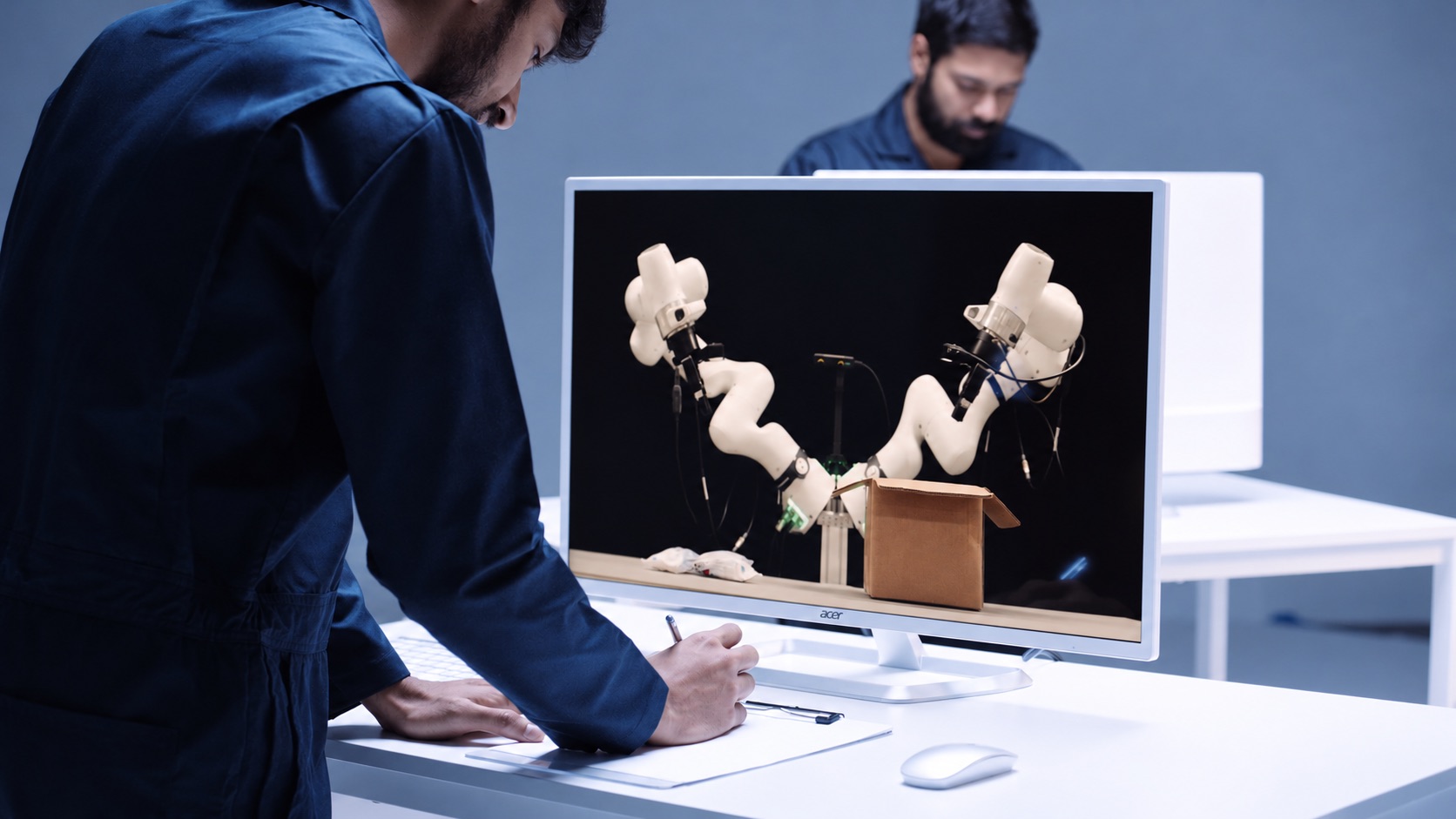
Odyssey’s October 8 research preview presents Odyssey-3 as a world model that predicts how scenes change as objects move and agents act. The official page shows it generating an interactive beach environment, manipulating objects with robot arms, controlling a humanoid, and driving on roads in India. Separate examples show an agent pursuing a goal inside the generated scene and a multi-camera driving sequence.
The clips make the pitch concrete: a learned model of visual dynamics can support both interactive generated environments and policies for physical systems. The company says its real-road driving policy used 20 hours of driving data while its world-model backbone stayed frozen. The robot-arm section describes recovery behaviors, such as reorienting after a missed grasp or retrieving a dropped object.
What the videos establish—and what they do not
The demonstrations are useful because each shows a different interface between a world model and action: generate a scene, manipulate an object, respond to a changed view, or choose a driving path. Odyssey also reports a 66.1 score on Physics-IQ Verified’s video-to-video benchmark and places near the top of several WorldMark categories in its own evaluations.
These are maker-produced research demos, not independent deployment trials. A short clip cannot establish reliability across homes, roads or factories. But the variety is the story: the same model family is being used to create interactive worlds, train agents and adapt to different physical systems. The linked clips let readers judge the actual behaviors rather than relying on a capability list.
Source published 2026-10-08. Coverage is based on the maker’s announcement and demonstration.