A model that returns a decision
Liquid AI introduced two open decision models: d1-3B and the experimental d1-omni-600M. The company describes them as a different type of model from a conventional text generator. Rather than producing a long sequence of tokens, a decision model takes one forward pass and selects a structured answer.
The d1-3B model accepts text and images; d1-omni-600M handles text with images or audio. Liquid AI reports that d1-3B answered a question in 16 milliseconds on NVIDIA Jetson AGX Thor, 26 milliseconds on Jetson AGX Orin and 50 milliseconds on Orin Nano. These are maker-published measurements, so hardware setup and task type matter when comparing them with other systems.
Where a small decision model could fit
This design is aimed at fast, bounded decisions: choosing an action, classifying what a camera sees or routing a request. For a robot or edge device, avoiding a long generated response can reduce latency and simplify how downstream software consumes the result. The model card and weights are available through Hugging Face, making it easier for developers to inspect the implementation.
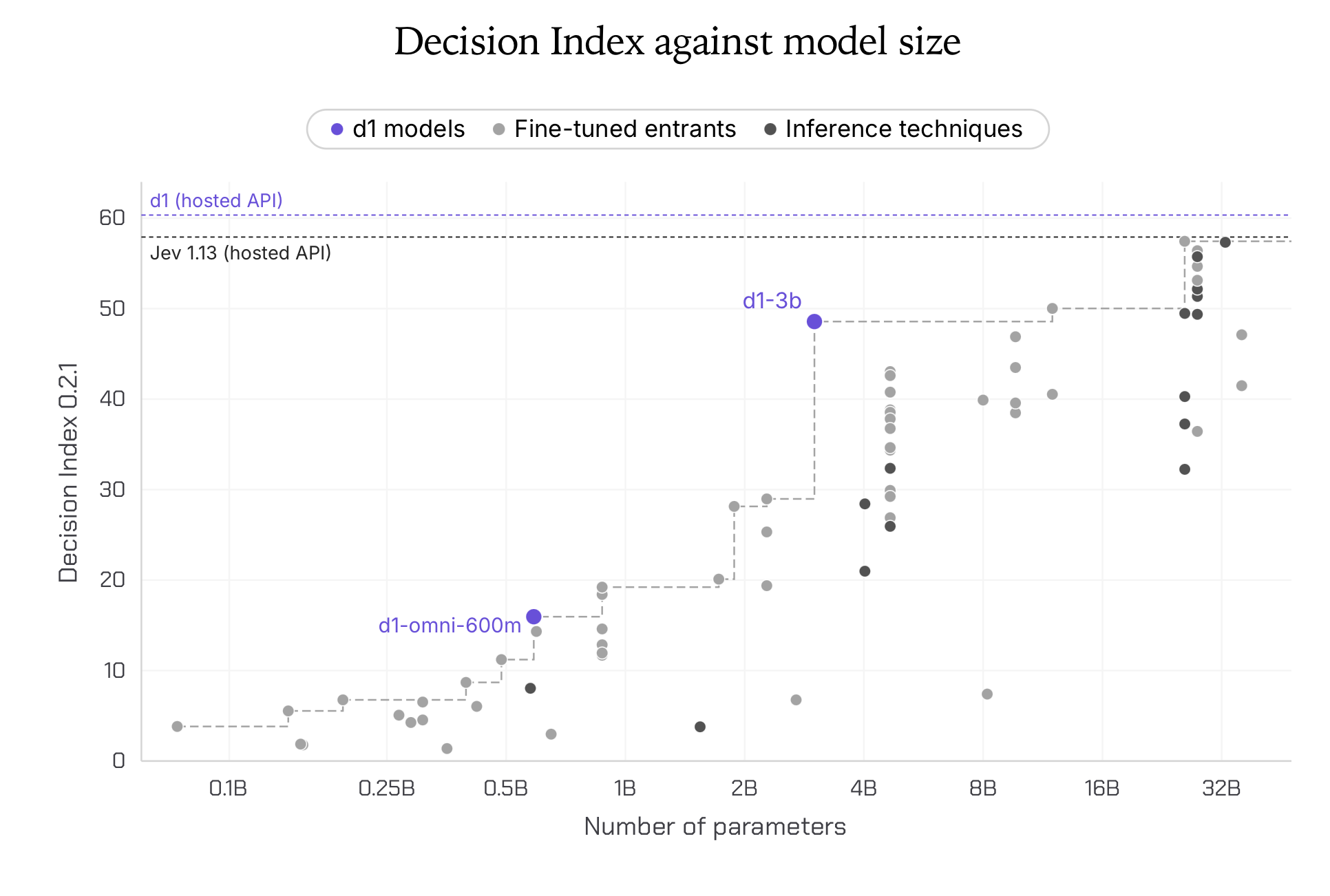
The benchmark claim is also notable for model size. Liquid AI says d1-3B leads the Decision Index 0.2.1 among models under 10 billion parameters, scoring 48.57. That score is the company’s report and should be checked against independent results as more implementations appear.
The right test is the whole workflow
Fast inference alone does not show whether the system is useful. A deployed workflow must be accurate for its specific decision, calibrated when uncertain and robust to the kinds of images or audio it will see in practice. It must also be compared on the target hardware, because latency and power use change across devices.
The useful question is whether a small model can make the first routine choice locally, while a larger model handles ambiguous cases. That pattern could make edge agents more responsive and reduce unnecessary cloud calls. The open release gives developers a concrete artifact to test, not a promise that every robot is ready to run autonomously.
Source published 2026-10-07. Coverage is based on the maker’s announcement and demonstration.