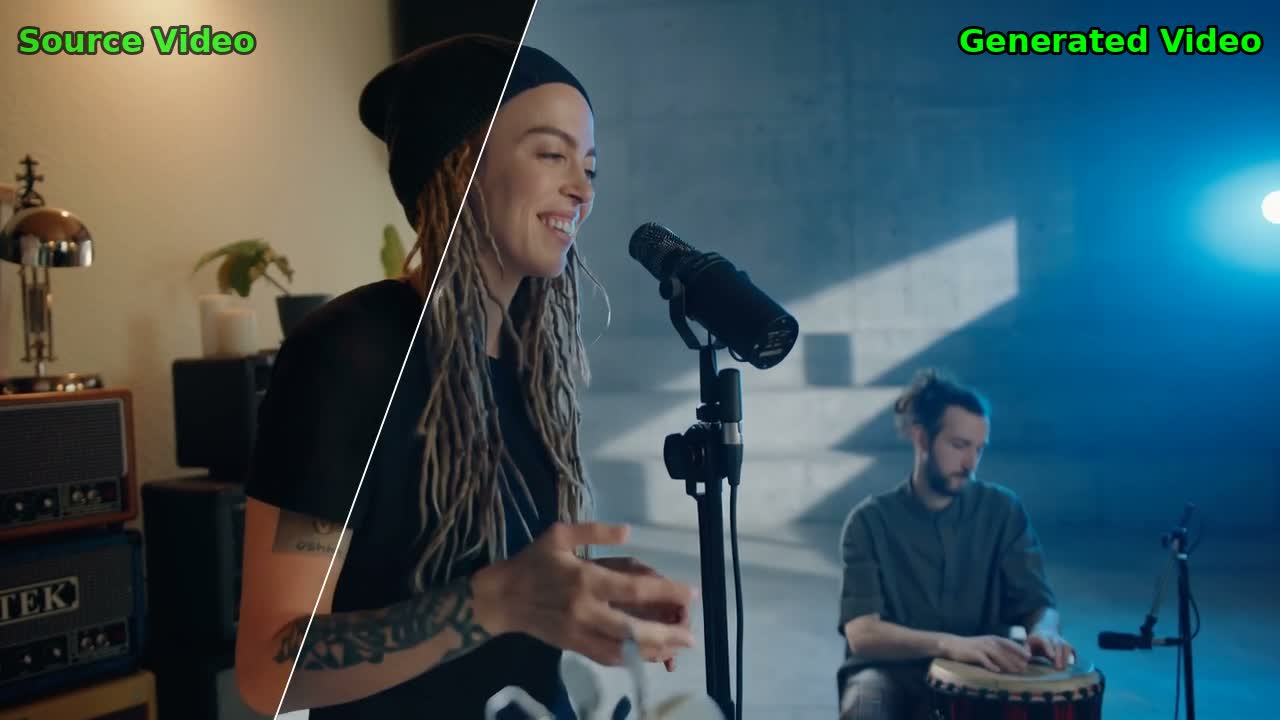
The striking moment in the ID-V2V examples is a familiar performance inside a transformed scene. The research framework from Netflix and Eyeline Labs uses an edited keyframe to specify a different setting, lighting or visual style, then carries it through the clip.
The example shown here keeps the original Source and Generated labels so you can see which side is the filmed material and which is transformed.
What it tries to preserve
Separate controls aim to preserve facial likeness, expression, gaze and lip movement. That combination matters because the creative value of a performance is often in small changes of timing and attention.
For a filmmaker, a useful restyle would change the visual direction without requiring another take. That is the attraction of this demonstration, rather than a claim that every clip will work perfectly.
Research to watch
The paper was submitted in July and revised August 19, with acceptance to SIGGRAPH Asia 2026. The project shows restyling and relighting examples, including multiple subjects.
It is research footage rather than a launched consumer editor. The project page is the best place to watch the comparison across time instead of judging it from one frame.
Source published 2026-08-19. Coverage is based on the maker’s announcement and demonstration.