Six distinct capabilities
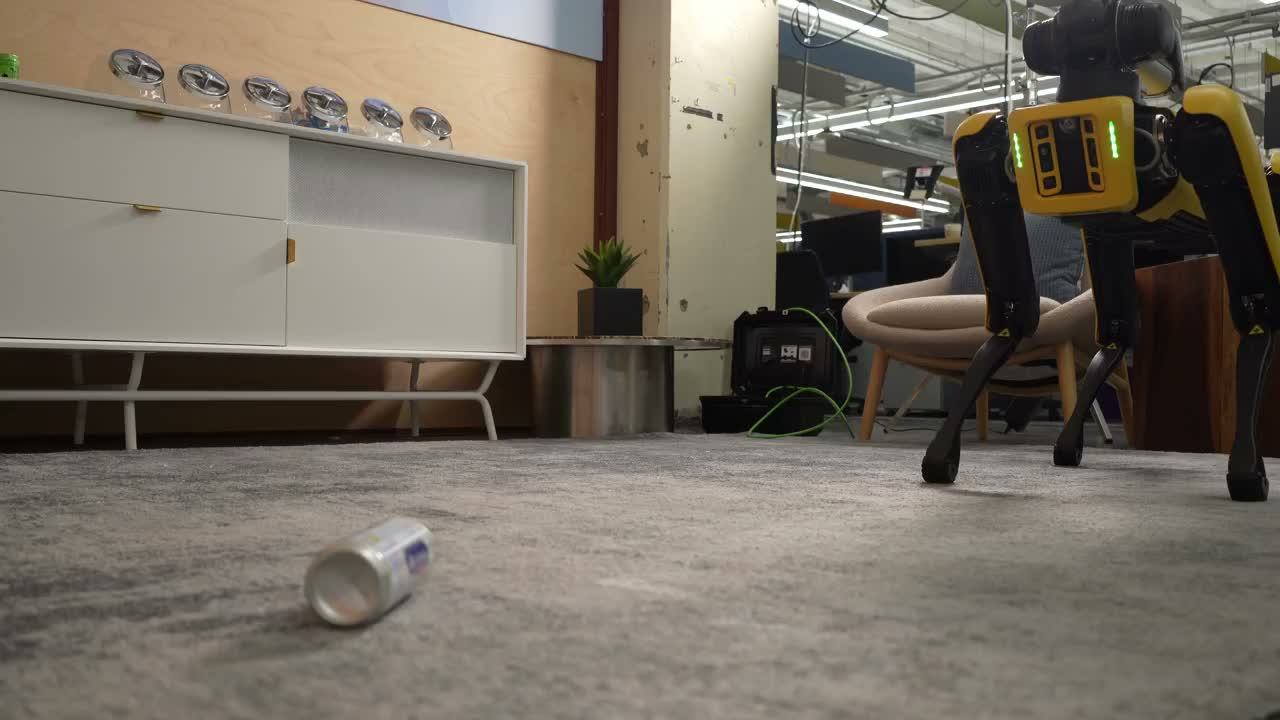
Google’s robotics post collects demonstrations of Gemini 4 Argon in embodied workflows: Boston Dynamics Spot practices in simulation before pressing a pedal to drop a can; a robot arm places a mug upright and a napkin inside it; and a world model steers scattered Scrabble tiles into the word ARGON.
Other clips move from real multi-camera robot footage into a physically matched MuJoCo scene, turn a hand-drawn sketch into a simulated humanoid task, and show a data-generation workflow used to improve a robot action policy. These are different capabilities—hardware control, world modeling, simulation and training—not one single end-to-end task.
What is real and what is simulated
The Spot interaction and tabletop-arm task are hardware demonstrations. The Scrabble transformation, sketch-to-simulation task and policy-improvement scenes are simulated workflows. Google reports a hardware success-rate increase from 56% to 75% in one action-improvement result; the post does not present this as a universal robot success rate.
Google also reports 87% on its ERQA benchmark. The videos are compelling because they show a path between human instructions, generated environments and robot actions, but they remain company demonstrations rather than independent evaluations.
What to watch
The most revealing next test is whether the same instruction-to-action pipeline works when objects, camera angles or room layouts change. Current clips demonstrate individual tasks; robust deployment also requires recovery from mistakes and clear communication of uncertainty. Google reports task-specific gains, not a universal robot success rate. We covered Argon’s general launch yesterday; this article focuses on the distinct robotics demos and capabilities shown in the clips. Related launch context: https://miketechlife.com/article/gemini-4-argon-global-access-complex-tasks
Source published 2026-10-13. Coverage is based on the maker’s announcement and demonstration.