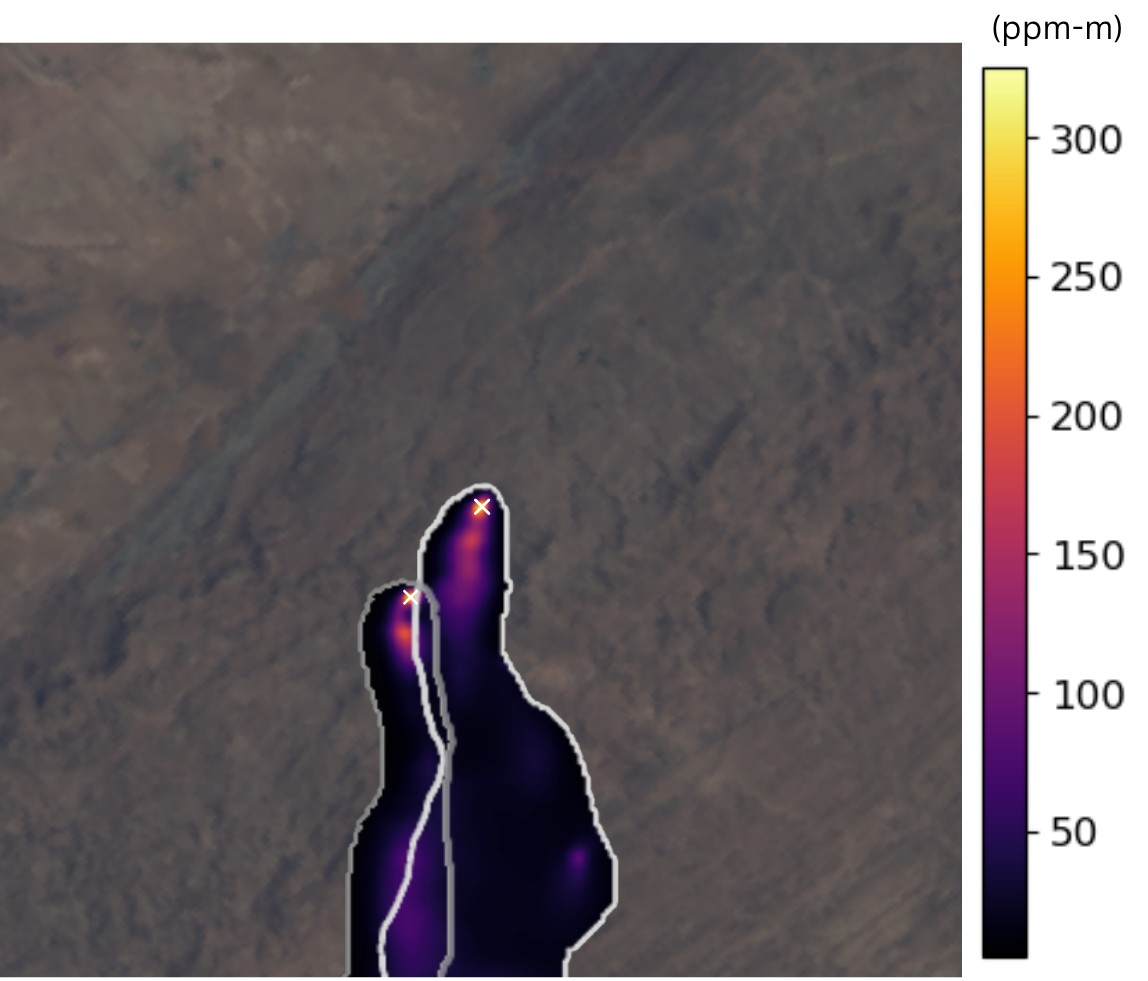
A normal photograph does not tell you where methane is escaping. The MAPL-EMIT research project looks at hyperspectral observations from NASA’s EMIT instrument aboard the International Space Station, then uses deep learning to identify possible plumes.
The figure shows the kind of output researchers can inspect: plume shapes, possible source locations and a concentration scale.
How the model learned
Researchers trained the system using 3.6 million simulated plumes inserted into real scenes. They report 84 percent recall on expert-annotated plumes and approximately 50 percent more plausible plumes across roughly 1,100 image granules.
“Plausible” matters here. The output is a shortlist to investigate, with confidence filtering and false positives part of the research problem. It is not a count of independently verified leaks.
Why the view is useful
The practical idea is to narrow the search. An enormous collection of observations becomes a set of locations that deserve a closer look.
The team released the model, inference library and datasets. That makes the work more than an eye-catching image: other researchers can examine and build on the method.
Source published September 1, 2026. Coverage is based on the maker’s announcement and demonstration.