What changed
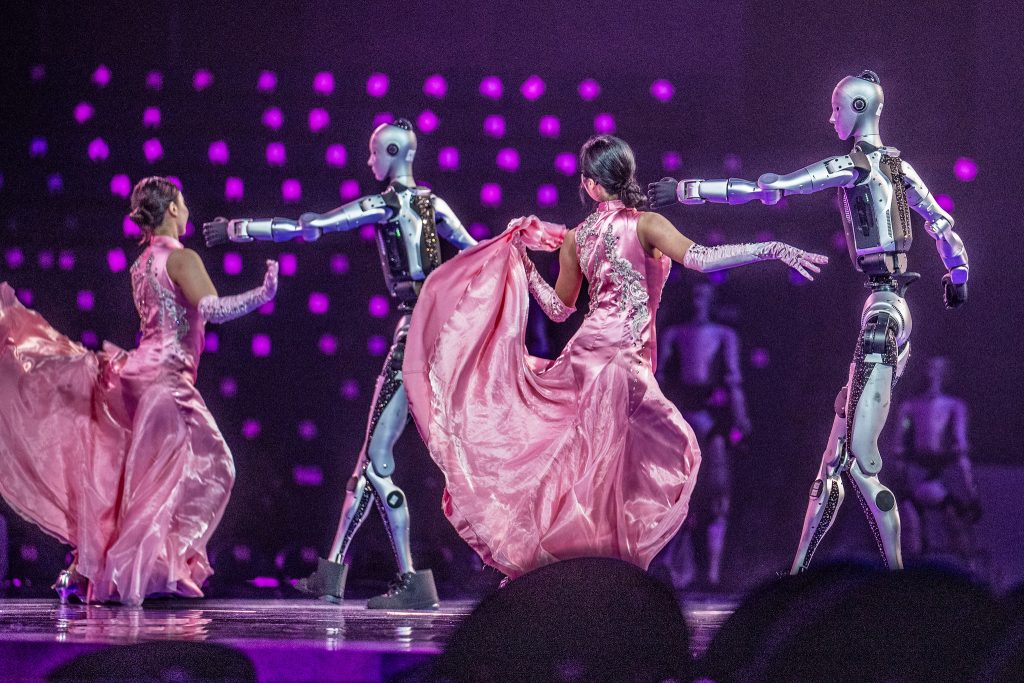
WorldSkills Shanghai’s opening ceremony placed humanoid robots on stage with 120 young dancers. The event organizer describes the sequence as a live performance, not a lab simulation.
The official event report says 20 humanoid robots took part. Unitree has separately described supplying 19 of them, so the number depends on whether the count refers to all robots on stage or just Unitree units.
What the demonstration shows
The performance is a vivid test of timing, balance and coordinated movement in a crowded scene. It shows what choreographed robots can do under stage conditions, not general-purpose interaction with an unpredictable crowd.
The dancers make the demonstration legible: viewers can compare robot motion directly with human movement and see where the machines are synchronized, stiff or expressive.
Why it matters
A short performance does not prove the robots can improvise or safely share a workplace. It does show how robotics companies are using public spectacles to make embodied AI capabilities visible.
The visual payoff is why robot demonstrations travel: one clip can communicate coordination and physical presence faster than a technical chart.
What to watch
The still image shows the physical proximity that makes the clip compelling: moving robots share stage space with fabric, performers and precise choreography. Their visible success depends on rehearsed timing and a carefully managed environment, which differs from improvising around people in an open public space.
Public demonstrations are useful because they make balance and coordination easy to see. They are a first look at embodied capability, while practical readiness will be judged by recovery from mistakes, safe contact and repeatability outside a scripted performance.
Source published 2026-09-22. Coverage is based on the maker’s announcement and demonstration.