A warehouse task with two different problems
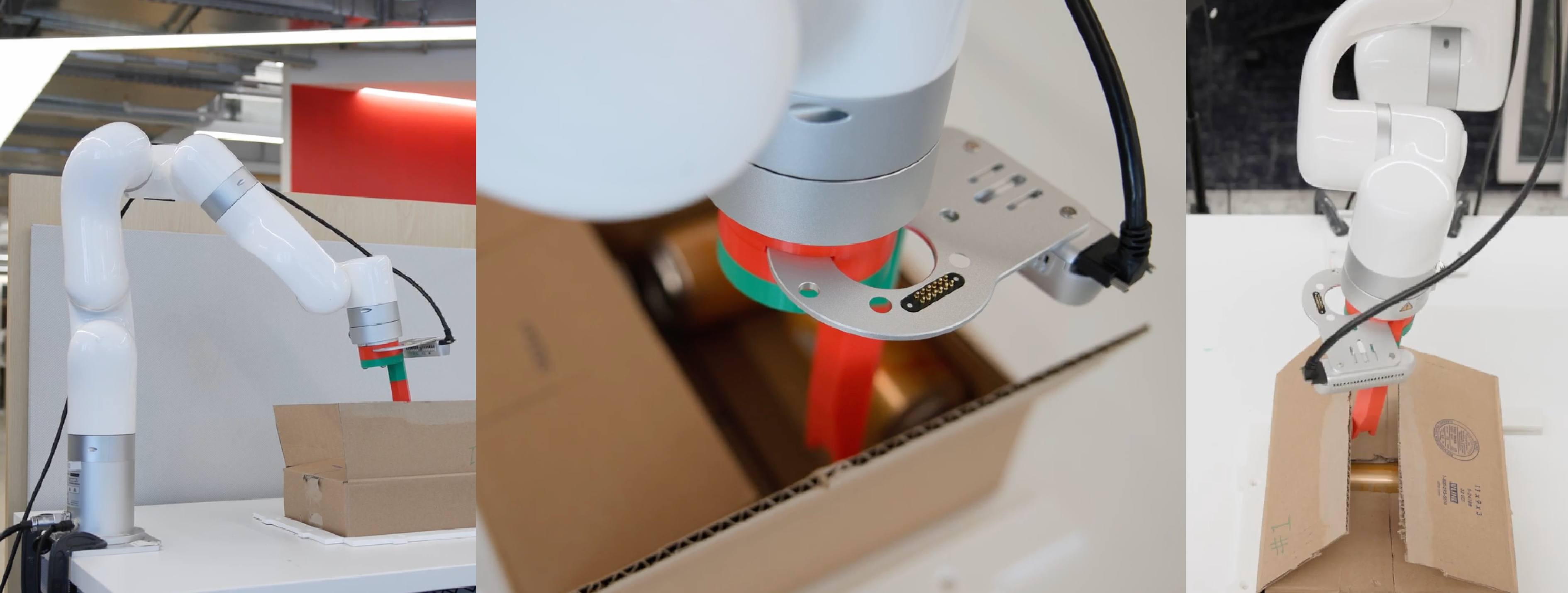
Opening a sealed carton looks like one action, but the robot has to solve two different control problems. It must locate a thin strip of tape, keep a tool aligned with it, and then deal with cardboard flaps that bend and resist in ways that vary from box to box.
Viam’s BoxBot demonstration separates those jobs. Image-based visual servoing guides the cut along the tape seam, which the company says can be only one or two millimeters wide. A learned policy then handles the physical interaction of pulling the flaps open.
What 125 examples changed
Viam reports that it gathered 125 teleoperated demonstrations in about five hours spread across four days. The examples were used to fine-tune SmolVLA, a vision-language-action model, through LeRobot and Hugging Face Jobs. The company says it did not need a custom model architecture or task-specific engineering for every movement.
That makes the result interesting beyond the box itself: the demo suggests a small, targeted set of human examples can adapt a general policy to a fiddly manipulation task. The number is a company-reported training recipe, not evidence that every carton shape or packing line will work without further data.
The robot runs locally
The demonstration runs on an NVIDIA Jetson Orin Nano rather than depending on a remote inference server. Keeping the control loop on the robot matters for a task where the tool must stay positioned against a moving, irregular surface.
Viam’s system is being presented as ongoing research at IROS 2026. The public demonstration establishes that the robot can complete this particular box-opening sequence; it does not establish general warehouse deployment or reliability across packaging materials.
Why this is a useful benchmark
A repeatable box-opening task exposes the gap between recognizing an object and manipulating it. The robot needs enough visual precision to find the tape and enough physical feedback to handle flexible cardboard after the cut.
The result is a concrete test of how much task-specific data a modern robot policy needs. The next useful comparison would be performance across different box sizes, tape colors, damaged packaging and repeated trials—not a claim that one successful demo has solved warehouse packing.
Source published 2026-09-22. Coverage is based on the maker’s announcement and demonstration.