Start with the shape, then refine it
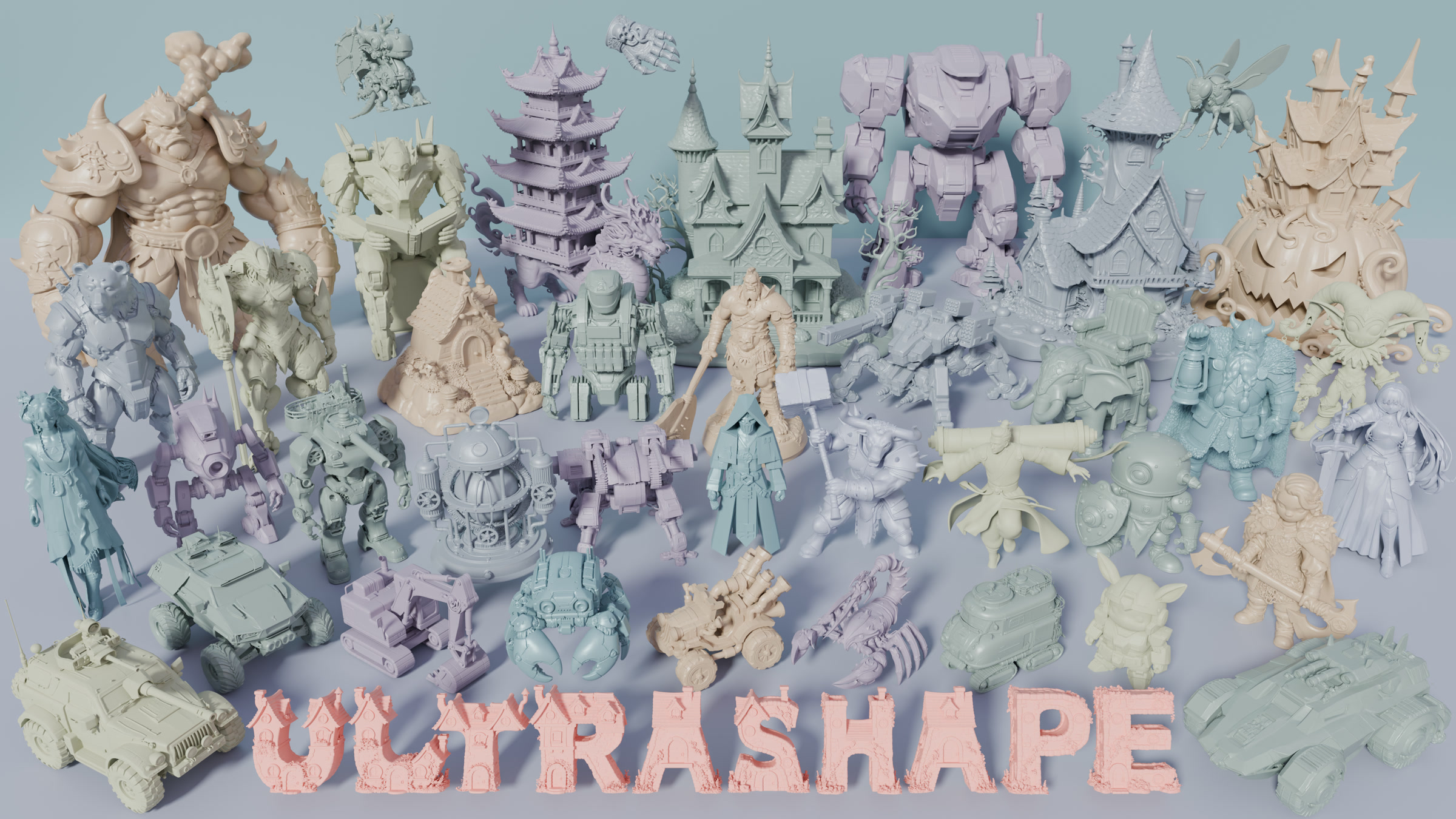
UltraShape1.0 is an existing 3D generation project with code and pretrained models released in December2025. Its documented workflow first creates a coarse mesh using Hunyuan3D2.1, then passes that geometry and a reference image into refinement. The project’s showcase image displays detailed example shapes.
That two-stage structure gives builders a useful question to ask: is the rough silhouette already right? If the starting shape is wrong, adding surface detail may make the mistake more elaborate. A coarse model is a checkpoint, not just an inconvenient intermediate file.
What the second pass changes
The authors describe a diffusion-based refinement method that anchors detail to locations derived from the coarse geometry. The repository exposes the reference image, mesh, checkpoint and output location as separate inputs. This makes the handoff between generation and refinement explicit.
For a practical inspection, rotate the result rather than judging only its front view. Check thin features, gaps between limbs, undersides and overlapping parts. Compare the refined shape with the initial mesh from the same camera angles. The goal is to identify which structures improved and which only became harder to see.
Detail is one production requirement
A detailed shape is not automatically ready for a game. Geometry density, topology, textures, collision and animation needs still depend on the destination. A static ornament and a deforming character have different requirements, even if both look strong in a turntable preview.
The useful role for refinement is one stage in a larger workflow. Keep the original mesh, inspect the result, and decide what cleanup the intended use requires. We reviewed the official examples and documentation; this article does not claim a local benchmark or a new September release.
Primary sources
https://github.com/PKU-YuanGroup/UltraShape-1.0
Source published 2025-12-26. Coverage is based on the maker’s announcement and demonstration.