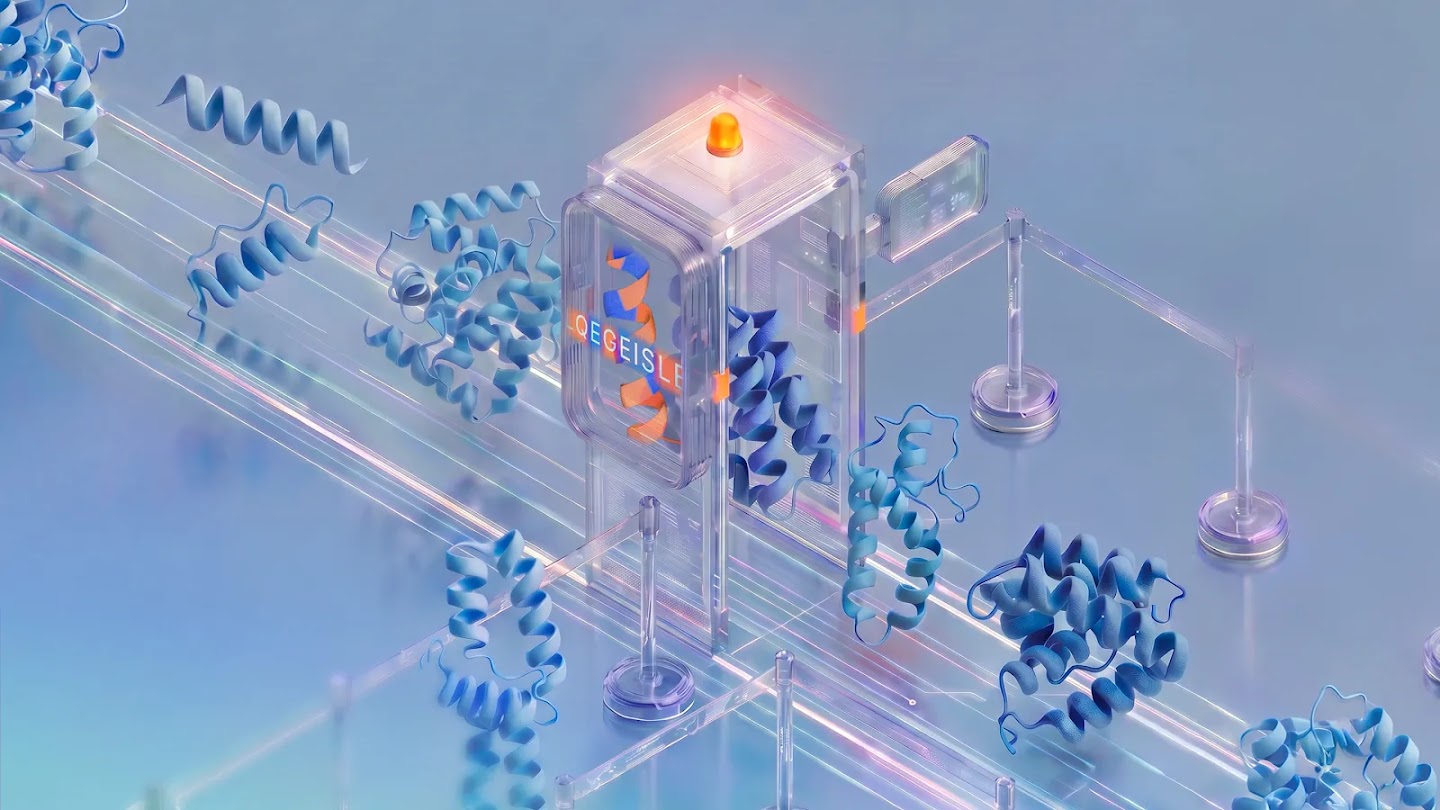
A watermark that stays with the biological design
SynthID Bio marks AI-generated protein sequences and predicted structures. The goal is to put a detectable provenance signal into the design itself rather than relying only on separate metadata that can be lost when shared.
For sequences, the method subtly changes amino-acid choices. For structures, DeepMind says it fine-tuned part of AlphaFold 3 so generated coordinates can carry a signature. Sources: https://deepmind.google/blog/introducing-synthid-bio/ and https://www.nature.com/articles/s41586-026-10965-y
Three protein-binding targets were tested in the lab
DeepMind says watermarked protein binders matched hit rate, binding affinity and natural sequence diversity across VEGF-A, SARS-CoV-2 spike receptor-binding domain and PD-L1. The team used AlphaProteo with a watermarked version of ProteinMPNN, then tested designs in wet-lab experiments.
The reported result is biologically functional binders with an embedded signal that can be checked. It is a proof of concept, not a method for every biological molecule or a replacement for existing screening rules.
The researchers name the next weakness
If a watermark can be removed or obscured, its value falls. DeepMind identifies deliberate tampering as an open challenge and says provenance metadata and shared repositories could complement it. No single intervention solves biosecurity by itself.
The Nature paper reports that its watermarked AlphaFold 3 model preserved prediction accuracy and maintained near-perfect detectability in the reported evaluation. DeepMind released code, in-vitro data and weights; further bacteriophage results are forthcoming.
Source published September 30, 2026. Coverage is based on the maker’s announcement and demonstration.