A moving scene is a harder question than a still
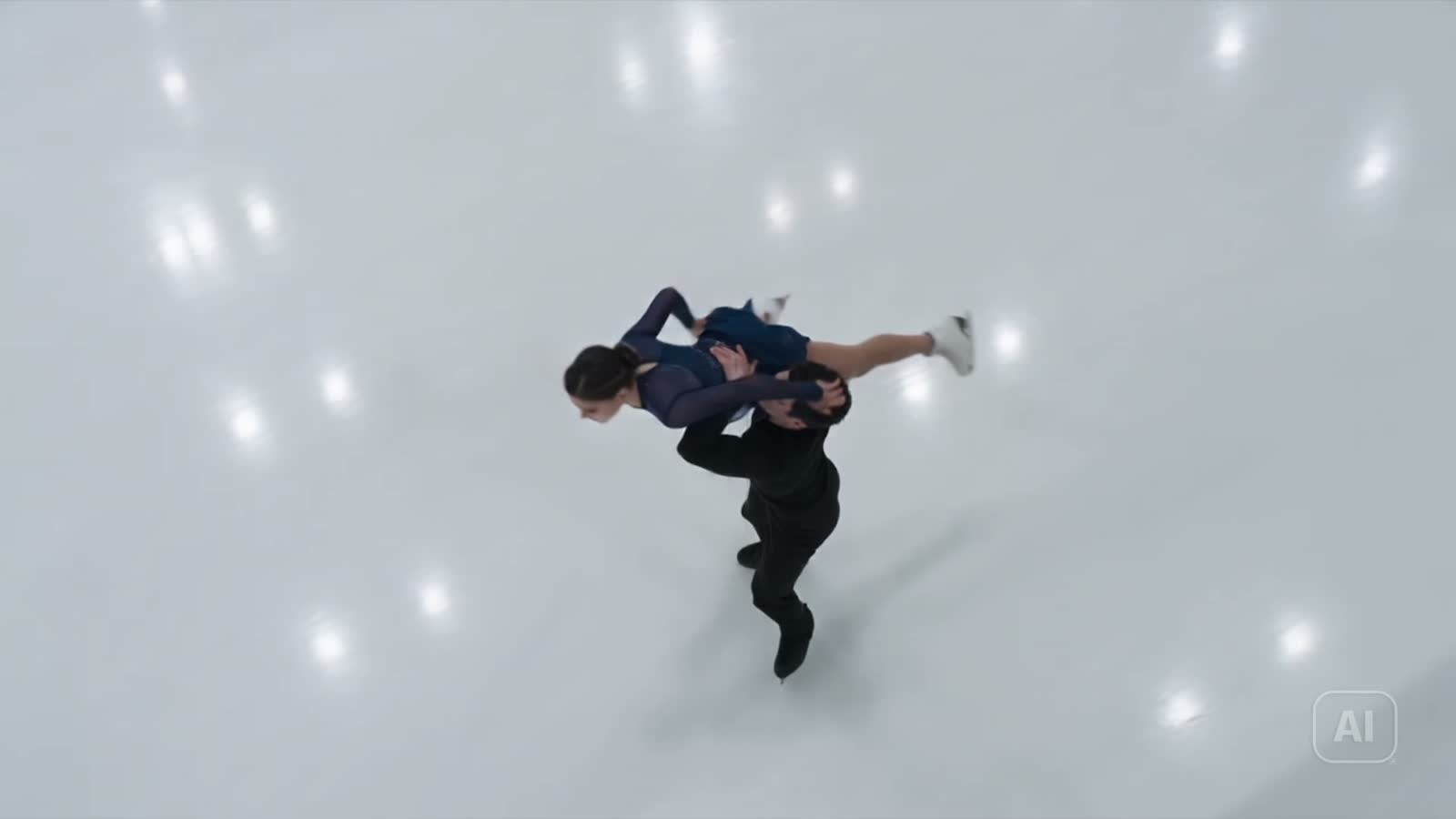
ByteDance Seed’s February2026Seedance2.0launch includes a generated pairs-skating scene. The demonstration combines moving people, changing camera angles and coordinated actions. The image above is a frame from that official example, not a photograph of an actual competition.
The company describes improved handling of complex motion, while also acknowledging remaining weaknesses in detail stability and consistency. A curated demonstration is a place to examine those questions, not a substitute for independent testing.
Follow three things through the sequence
First, track identity. When the camera cuts, can you still follow which body belongs to which participant? Second, watch contact: where a hand holds another person, where a skate touches the ice, and how those relationships change during the lift. Third, follow continuity before and after a jump rather than judging only the most attractive frame.
These checks are useful for anyone choosing generated footage for a project. A clip that looks convincing at a glance can still need closer inspection at the exact moment a viewer’s attention lands. They are an evaluation method, not a scored benchmark.
What this example does and does not show
Seedance2.0was introduced in February, so this is a closer look at an existing example. Our edited Reel preserves the wide frame to keep both skaters visible and omits source audio. The article and video focus on visual motion; they make no claim about the quality of its soundtrack or the model’s newest version.
Source published 2026-02-12. Coverage is based on the maker’s announcement and demonstration.