Follow the task, not the silhouette
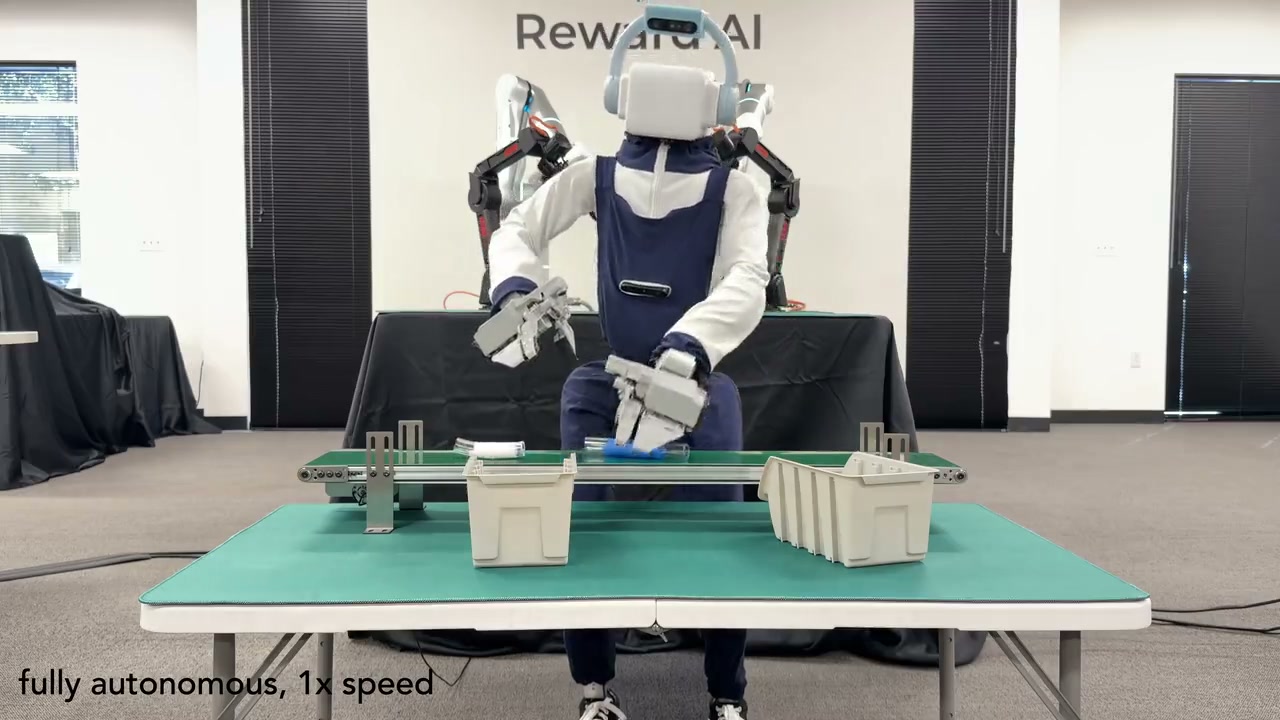
The most useful detail in this short demonstration is the change of hardware. Reward AI shows different robot setups manipulating objects between containers. Instead of judging only the humanoid’s appearance, watch the hands, the object and the destination. That makes the comparison easier to follow.
The footage is supplied by Reward AI and labeled autonomous at normal speed. It is a company demonstration, rather than a test conducted by MikeTechLife.
Where the skill comes from
Reward AI says OM-1 learns manipulation from human demonstrations captured with its wearable Omnibody Hand. The aim is to use one policy across different robot bodies instead of treating every machine as an entirely separate learning problem.
Its training claim has an important boundary: the manipulation policy uses human data, while a separate control layer is trained in simulation. That lower layer translates actions into the behavior of the particular machine.
A better way to watch robot demos
Try three checks: Is the task comparable across the cuts? Can you see the grasp and release? Does the demonstration show what happens when conditions change? A successful clip answers a narrower question than reliability across a full working day.
Here, the useful takeaway is transfer across bodies. The next evidence to look for is repeated performance, task variety and recovery from mistakes—not just another impressive silhouette.
Source published 2026-09. Coverage is based on the maker’s announcement and demonstration.