What changed
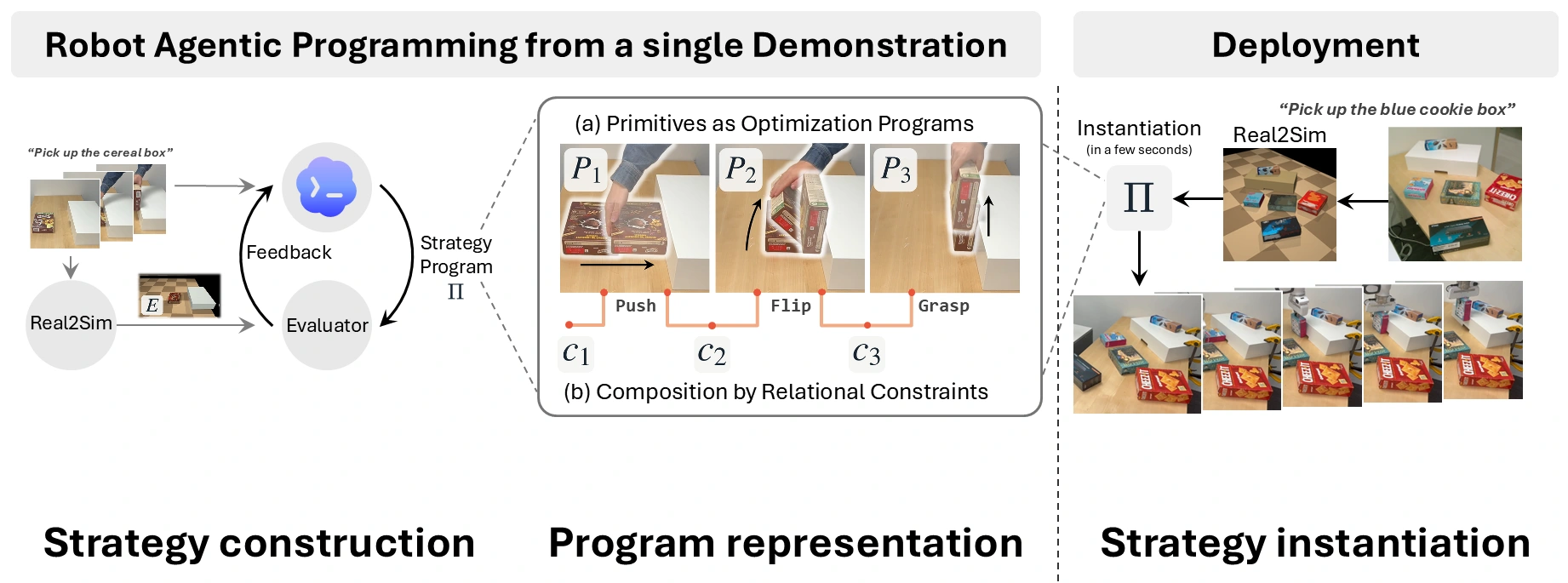
RAPID takes one visual robot demonstration and builds a task specification, reusable motion primitives and a representation of the environment. It then iteratively checks whether the resulting program works.
The researchers evaluated eight contact-rich tasks with a real Franka arm. They report a mean success score of 75.9% ± 2.4% across 50 novel scenes per task, with one demonstration for each task.
What the demonstration shows
The useful idea is to separate “what should happen” from the exact pixels and coordinates in the original example. A verified task program can adapt when object placement or the scene changes.
This is a research system, not a turnkey home robot. The reported results cover eight chosen tasks, and the project page says code is coming soon.
Why it matters
If this approach scales, teaching a robot could look more like showing it a task once and correcting its plan than collecting hundreds of manually labelled trajectories.
RAPID points toward a practical bridge between demonstrations and dependable robot behavior: let the model propose a program, then make execution and verification part of the learning loop.
What to watch
Contact-rich tasks are difficult because the robot must keep sensing forces and adjust as objects touch or resist. A script that works only from a fixed starting pose is brittle; testing many novel scenes is a more meaningful check of whether a demonstrated skill transfers.
The next evidence to watch is whether outside teams can reproduce the result and whether the method transfers to more objects, robot arms and longer tasks. The reported average is promising, while task-by-task scores will show where the approach still breaks.
Source published 2026-09-24. Coverage is based on the maker’s announcement and demonstration.