From cutout to context
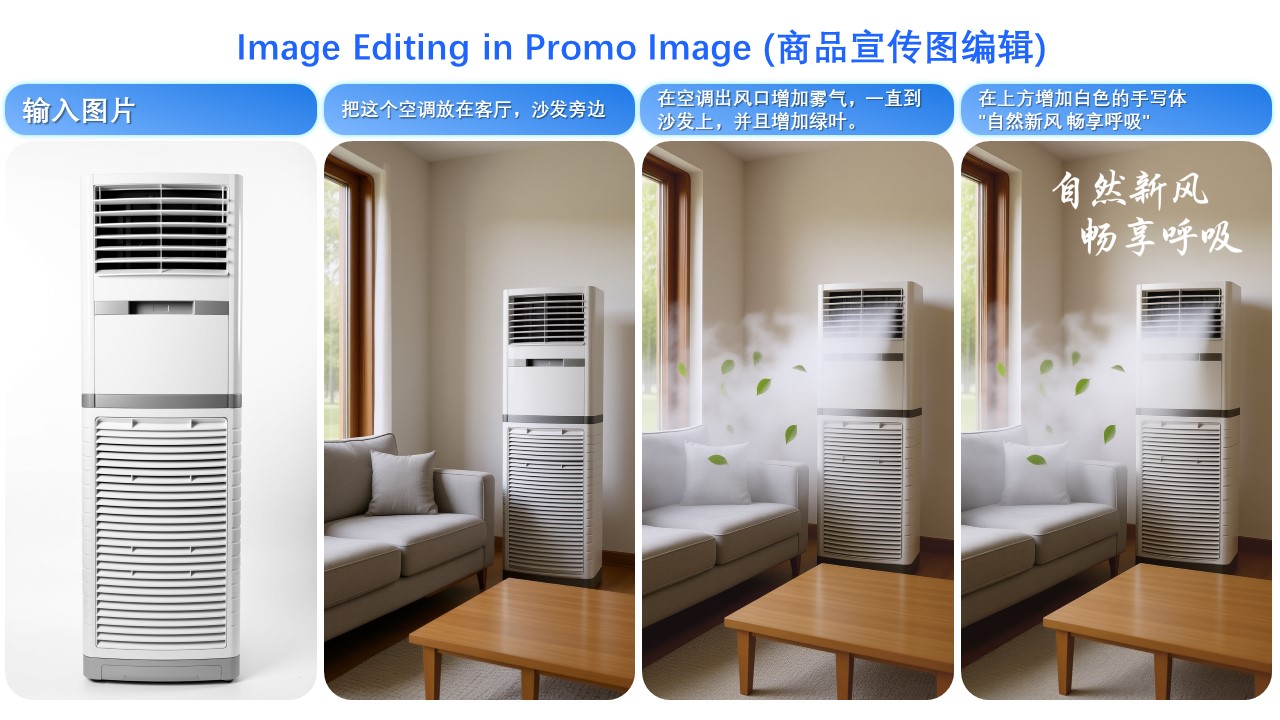
A plain product photo can explain what something looks like. Put the same object into a believable room and someone can start imagining where it belongs. Qwen’s official Image-Edit-2509 example shows that progression with a floor-standing air conditioner: isolated product, living-room scene, added visual effects, then poster lettering.
This is an example from the September 2025 model, not a new September 2026 launch. The model card describes editing with one to three reference images and a focus on retaining the identity of people and products. The pictured room and effects are generated promotional imagery.
Give each reference one job
For your own evaluation, start with an object you know well. Use a clear product image as the identity reference and a separate scene image for the setting. Ask for one placement change first. Adding a room, stylized lighting, lettering and effects together makes it harder to identify which instruction caused an unwanted change.
The useful check is surprisingly ordinary: count the vents, compare the controls, inspect the logo and look at the edges. Then check shadows, perspective and scale against nearby furniture. A beautiful background cannot compensate for a changed product.
A repeatable comparison
Save the original beside each result. Compare the same details after every revision instead of judging only the overall impression. For a maker, designer or small shop, that turns an eye-catching demo into a concrete quality checklist. We reviewed Qwen’s published example; this is a proposed evaluation method, not a claim of firsthand testing.
Source published 2025-09-22. Coverage is based on the maker’s announcement and demonstration.