A concrete early result
OpenAI introduced the Agents API in public beta on September 10. Ciridae, one of the customers quoted in the launch, says its evaluation score rose from 0.71 to 0.85 after adopting the API. It also reports a fourfold latency reduction for its subagent workflow. Those are Ciridae’s results for its own evaluation, not a promise for every application.
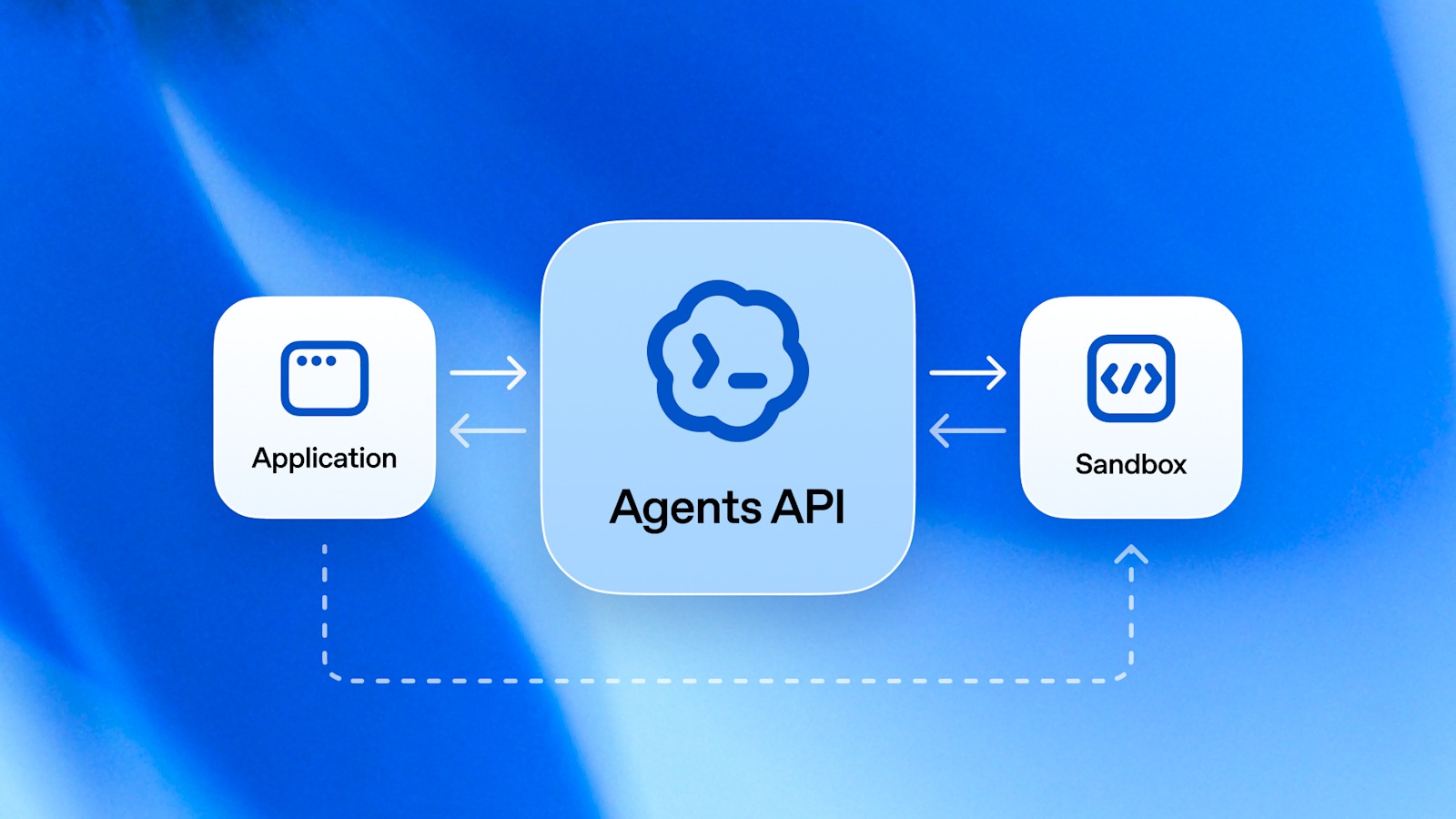
The API brings the Codex agent harness to developers through a managed interface. An app sends a task, model, tools and environment; the harness manages context, tool calls and delegation. That could remove a substantial amount of custom orchestration work for teams building agents that need to operate over hours rather than answer one prompt.
Where the work runs
Developers can choose an OpenAI-hosted sandbox or use their own infrastructure or a supported sandbox partner. The environment gives an agent a place to run code, read files and save artifacts while the API streams events and results back to the app. Tool support includes MCP, custom functions and built-in tools.
The harness can compact earlier context as a session grows, search for tools as needed and coordinate parallel subagents. Each feature targets a common failure mode of long-running agents: losing the thread, carrying too many tool definitions or forcing every part of a complex task into one serial context. The application still decides which capabilities and data to provide.
What builders should measure
OpenAI says there is no separate Agents API fee during beta; developers pay for tokens and tools. Cost therefore depends on how the agent uses the model, sandbox and external services. A faster result from one customer needs to be paired with total spend and task quality when evaluating a new workflow.
A good trial gives the old and new setups the same tasks, then compares completed work, human corrections, latency and operating cost. The API is interesting because it standardizes the hard plumbing around frontier agents. Whether that helps a particular product depends on the tools, permissions and evaluations built around it.
Source published 2026-09-10. Coverage is based on the maker’s announcement and demonstration.