From one simulated robot to thousands
NVIDIA’s tutorial uses an SO-101 follower arm to show how a standard MuJoCo workflow can move to MuJoCo Warp, or MJWarp. The GPU-based simulator can run as many as 2,048 parallel environments for compatible workloads.
That matters because robot-learning experiments often need to sample many scenes or actions. Instead of running one simulation and waiting for it to finish, researchers can advance a large batch of simulated worlds together.
What the guide actually shows
The walkthrough connects Python, MuJoCo models and NVIDIA Warp, then demonstrates a GPU-backed simulation path for the SO-101 arm. It focuses on the mechanics of moving a familiar workflow and checking whether the converted model behaves as expected.
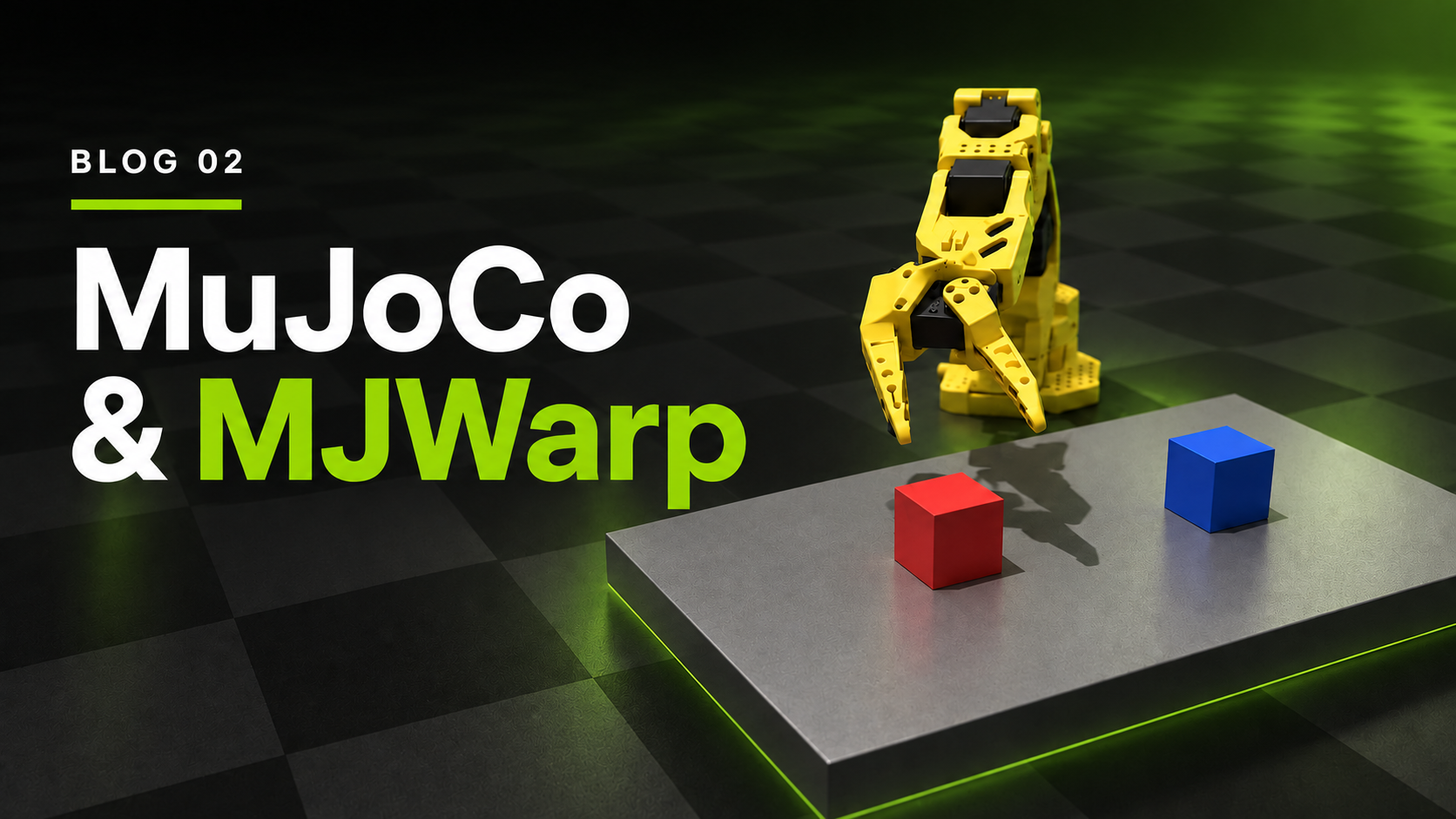
The figure above shows a robot arm and objects in a simulation scene. The 2,048 figure is the maximum parallel environment count in the tutorial, not a guarantee that every model or GPU will reach that scale.
Why simulation scale matters
More parallel environments can give a learning algorithm more examples per training cycle and make it easier to explore varied conditions. The benefit depends on the robot model, simulation workload and available GPU memory.
A large simulation batch is not the same as a robot that works in the real world. Teams still have to validate the physics model and transfer learned behavior onto hardware.
The practical takeaway
The useful change is that a robotics workflow written around MuJoCo can be adapted for GPU-parallel execution rather than rewritten from scratch. That makes it easier to scale experiments while keeping the Python-facing simulation workflow familiar.
NVIDIA’s guide is for robotics developers and researchers who need more simulation throughput. It shows a path to test at scale, not a reported improvement in real-robot success.
Source published 2026-09-23. Coverage is based on the maker’s announcement and demonstration.