Three parts of the care pathway
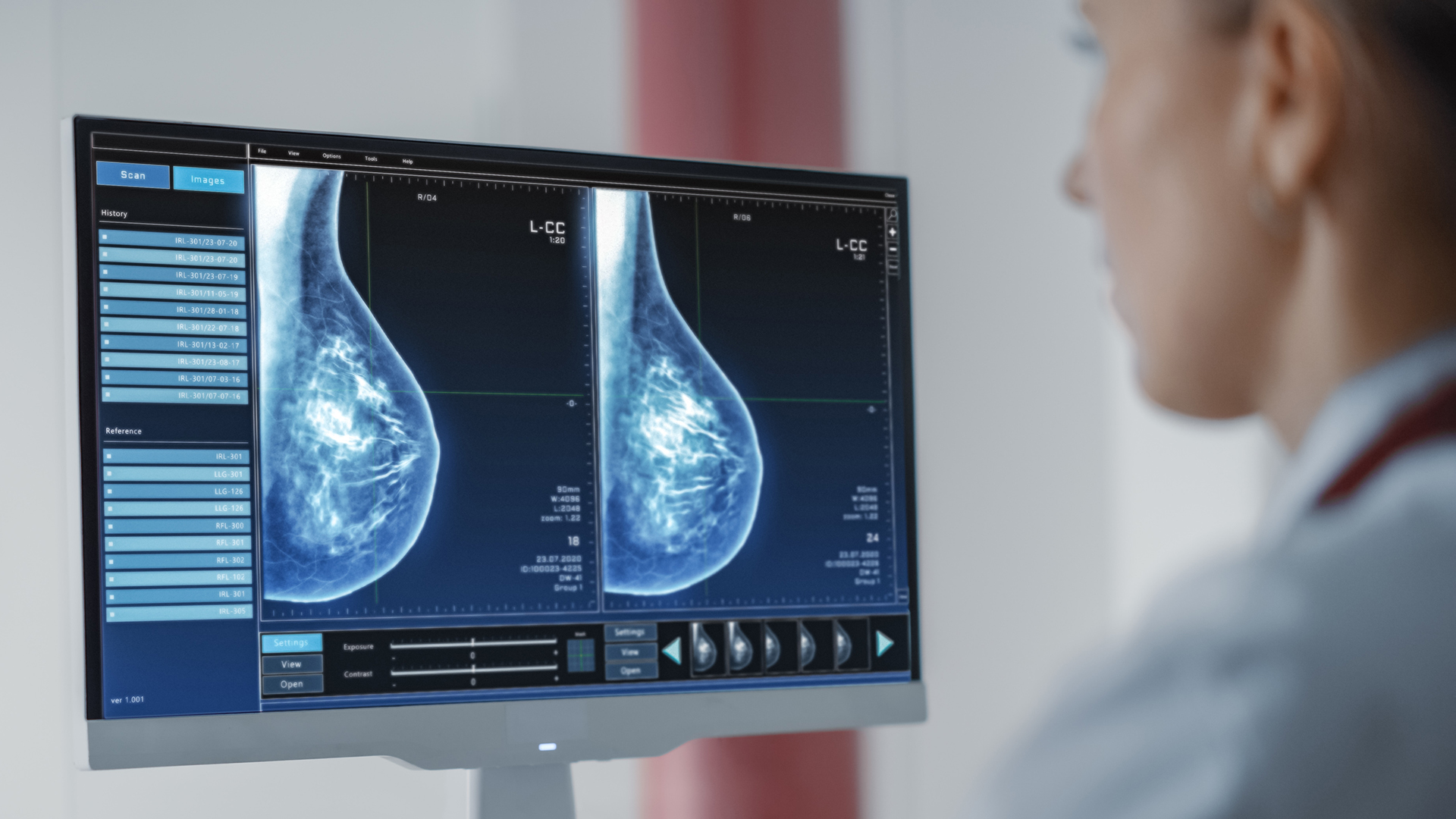
NVIDIA’s October 5 report describes startups working across breast cancer imaging, risk assessment and treatment planning. The article frames the need around screening and radiology capacity: roughly 40 million mammograms are performed in the United States each year, while reading workloads are rising.
The companies in the piece are part of NVIDIA’s Inception startup program. Their work spans more than one clinical step, which is useful context: “medical AI” may mean analyzing an image, estimating risk or helping a clinician interpret a treatment-planning problem.
From scans to surgical decisions
The report profiles iSono Health and SimBioSys among companies applying AI to breast-cancer care. The larger opportunity is not one all-purpose cancer model but specialized software that helps clinicians interpret complex imaging and organize information for decisions.
These are company examples and a platform-provider overview, not proof that AI has improved patient outcomes across hospitals. Clinical usefulness depends on validation, patient population, workflow fit and whether a clinician can inspect the evidence behind a result.
What to watch next
A useful signal will be how these tools perform in clinical studies and routine care: Does a system help find relevant detail, reduce time to review or improve planning without adding new failure modes? The answer needs clinical evidence, not a polished demo.
The immediate story is that AI companies are trying to connect medical imaging with downstream decisions. If the technology works in practice, its value will be measured by clinicians and patients—not by the number of AI features in a product.
Source published October 5, 2026. Coverage is based on the maker’s announcement and demonstration.