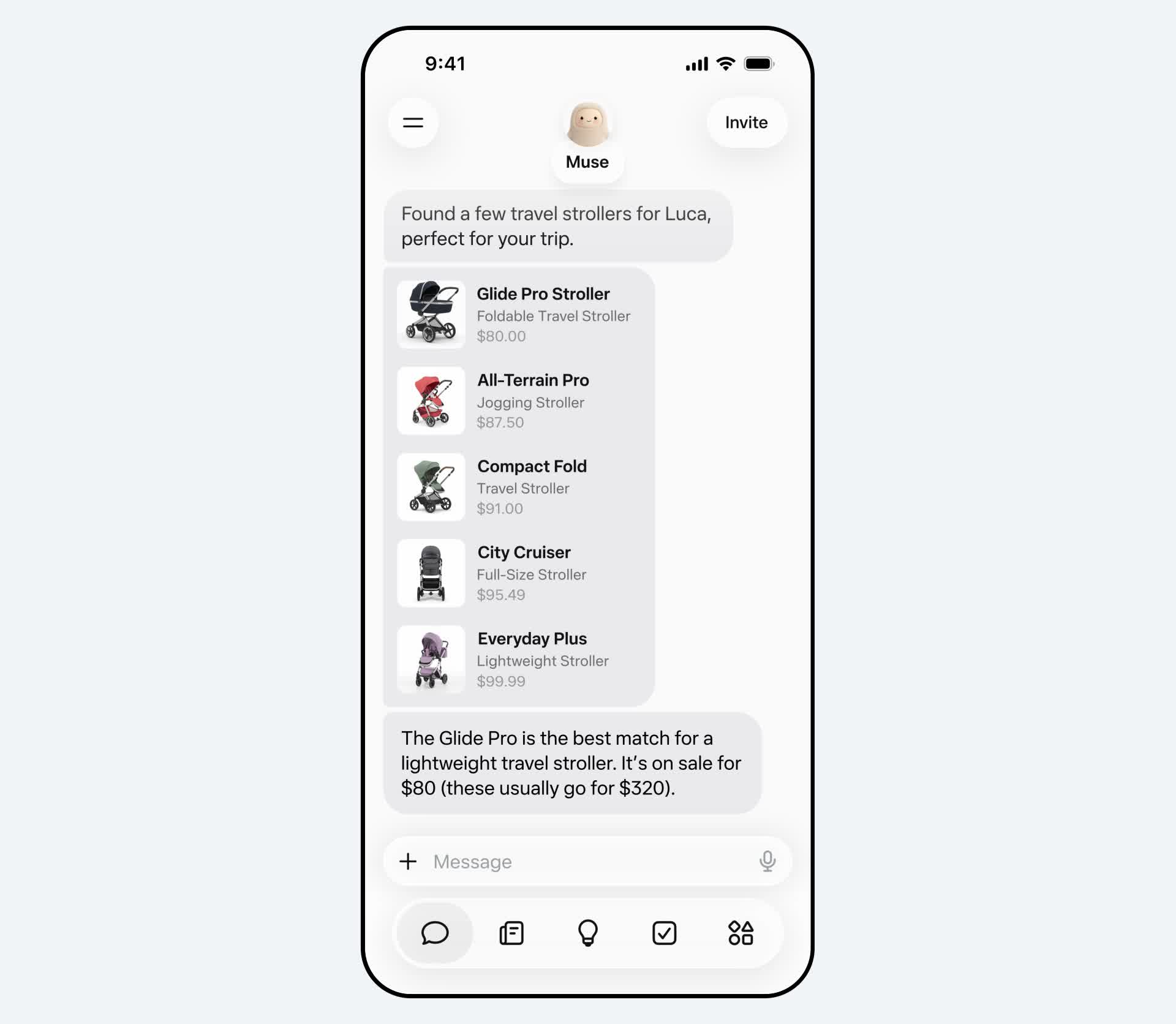
From a request to a shortlist
Meta’s shopping demonstration shows Muse presenting stroller options inside a conversation. It is a product demonstration, including its example listings and prices, rather than a live deal comparison. The interesting shift is the workflow: the conversation can lead toward an action instead of ending with suggestions.
Meta introduced Muse on September 8. The company says the agent runs on a dedicated cloud computer, can continue longer tasks after you close the app, and checks with you before sensitive actions such as purchases or sending email.
Make the stopping point part of the request
A useful first shopping task would have a clear boundary: find three options, show the total delivered cost, explain the return conditions, and stop for review. Put the budget and the non-negotiable requirement in the opening request.
Then check the shortlist against the actual seller pages. Does the item match the size or compatibility requirement? Is shipping included? Would you still choose it without the suggested discount? Those questions make the output easier to judge before committing money.
What to expect from the rollout
Meta describes a US rollout on iOS, Android and the web, with free use for many tasks and subscriptions for heavier use. Users choose connected services and their access. Its announcement also describes an activity record showing what Muse has done and plans to do. That record and the approval boundary deserve attention alongside the speed of a demonstration.
Source published 2026-09-08. Coverage is based on the maker’s announcement and demonstration.