AI enters the editing timeline
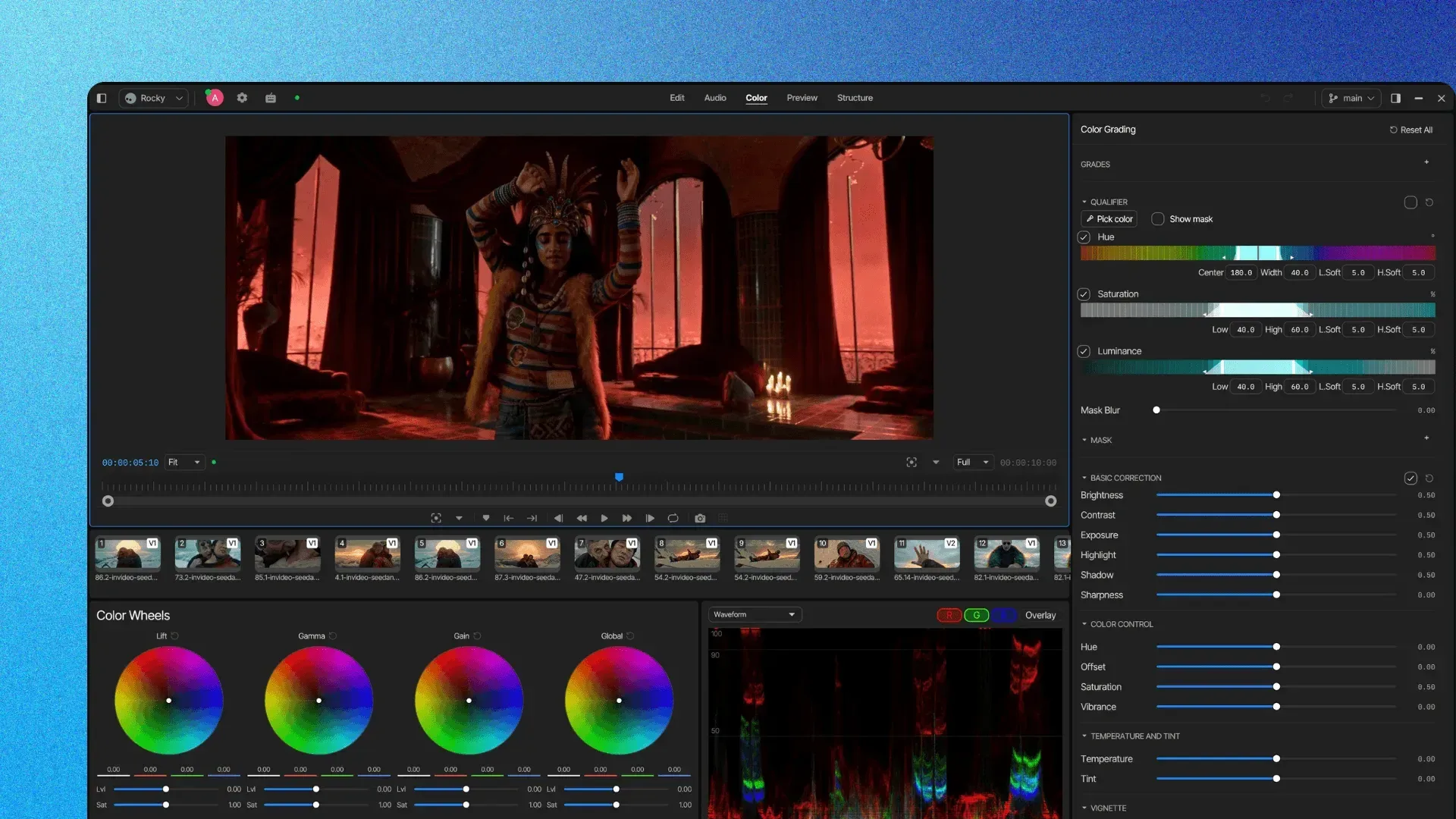
InVideo’s editor now lets users describe a color treatment to an AI agent, then continue adjusting the result with familiar editing controls. The tool exposes a multitrack timeline, color wheels, curves, qualifiers and scopes, so an AI-suggested look can still be revised by an editor.
In a case study published by OpenAI, InVideo says its editors produced about 50 custom, editable effects in one day. The effects were created for real editing workflows and remained adjustable rather than being flattened into an unchangeable output.
What the success-rate claim means
InVideo says its success rate for color grading and correction improved by roughly three times with the model it used. That is the company’s reported result on its own workflow, not an independent test comparing every editor or every kind of footage.
The practical task is to make adjustments such as exposure, color temperature, contrast or a requested mood. A useful system has to interpret the instruction, apply changes to footage and leave a result the editor can accept or fine-tune.
Human control remains built in
The product’s color-grading page emphasizes manual controls alongside the AI agent. Editors can use lift, gamma and gain wheels, alter exposure and contrast, work with curves, or ask the agent to revise a grade based on feedback.
That matters because color is a creative decision, not just a numerical correction. An agent can accelerate a first pass or help apply a look across a timeline, while the person remains responsible for how skin tones, shadows and highlights appear in the final cut.
Where the workflow could help
A repeated color treatment across many shots can become tedious, especially when a team is comparing several looks or adapting a sequence for different projects. The ability to ask for a grade in plain language and then edit it may shorten that loop.
The reported result is promising but narrow: a company-specific measure of success on color-grading tasks and a one-day effects output. The next useful evidence is how often editors keep the AI-assisted grade and how much revision it needs on varied footage.
Source published 2026-09-23. Coverage is based on the maker’s announcement and demonstration.