A reported operating result
SpaceXAI says its combined support operation has seen a 175% increase in ticket volume without adding staff since bringing Grok Bot into the workflow. The company says it might otherwise have hired 200 people, but that is its estimate of a hypothetical alternative, not a measured job count. It also reports that some tickets cost as little as $0.20 to $0.30 to resolve.
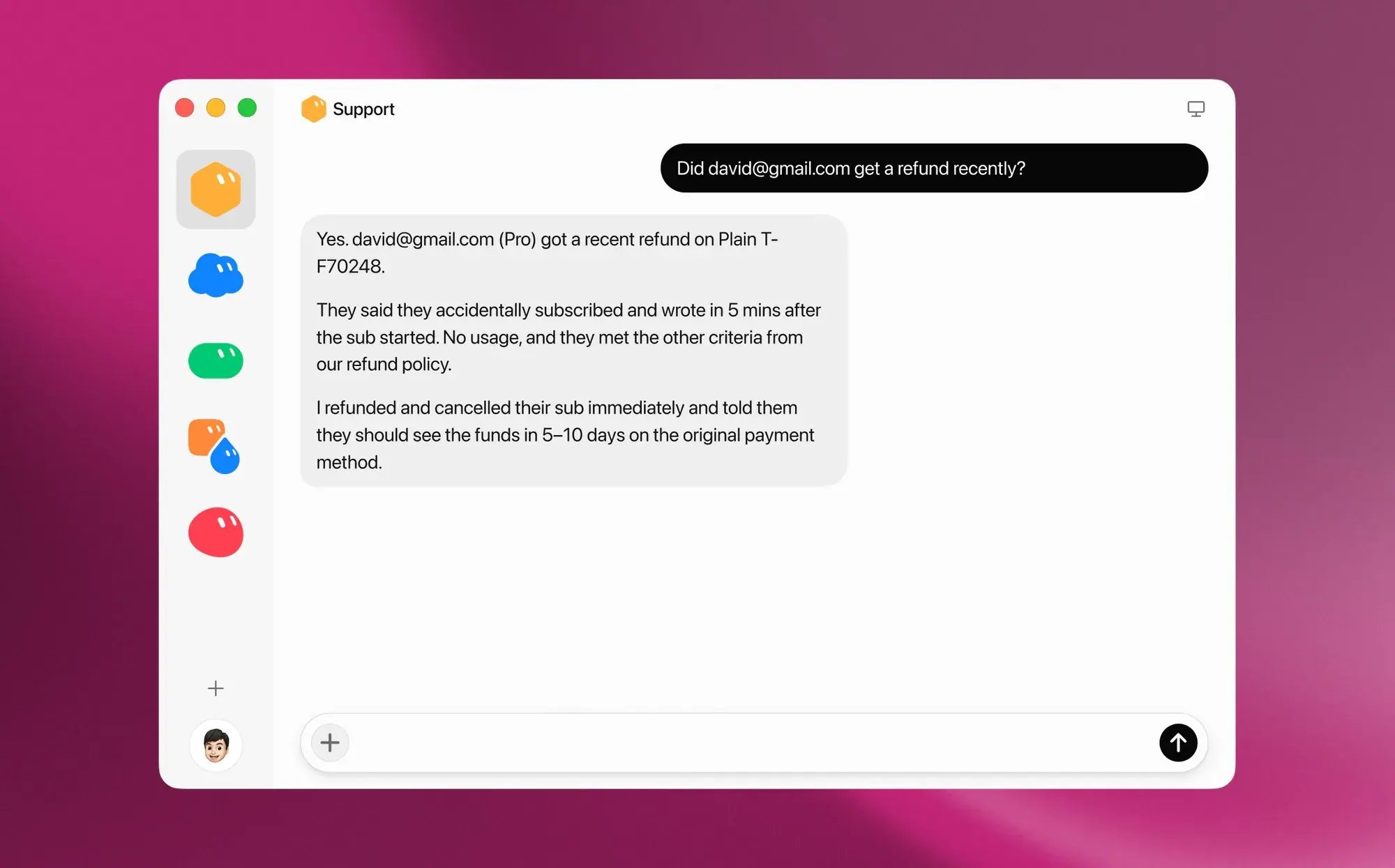
Refunds provide a sharper example. With written criteria and access to the relevant systems, SpaceXAI says Grok Bot resolves 99% of refund requests without human intervention. This is the company’s own account of its support operation, so the percentage should be read as a case result, not as an industry-wide rate.
How the rollout happened
The team first connected Grok Bot to Plain for tickets and Linear for issue tracking. It allowed the agent to investigate and write internal notes, but required a person to approve every write action. After adding traces and evaluations, the team expanded to simpler tickets, reviewed proposed answers and eventually let the bot respond directly.
Grok Bot now pre-investigates incoming tickets, checks known issues and can reproduce some problems with a video for engineering. It can flag emerging incidents and group feedback for product teams. SpaceXAI says it synthesizes more than 20,000 customer feedback points a day, turning support from only a resolution queue into a source of product signals.
The transferable lesson
The impressive number is easier to understand when paired with the sequence of permissions. Giving an agent access to systems did not by itself create the result. The company built a review loop, looked at failures, documented refund rules and widened the tasks gradually.
A smaller team considering the same approach would first measure ticket categories, error rates, customer satisfaction and escalation quality. The best early candidates are repetitive issues with clear policies and reversible actions. Hard judgment calls still need people. This example shows what an operational agent can do when its tools and authority are bounded by a workflow.
Source published 2026-09-22. Coverage is based on the maker’s announcement and demonstration.