What changed
Google DeepMind describes Gemini Robotics 2 as an intelligence layer that connects visual and language understanding to robot movement. Its embodied-reasoning model can plan multi-step jobs and hand actions to a lower-level controller.
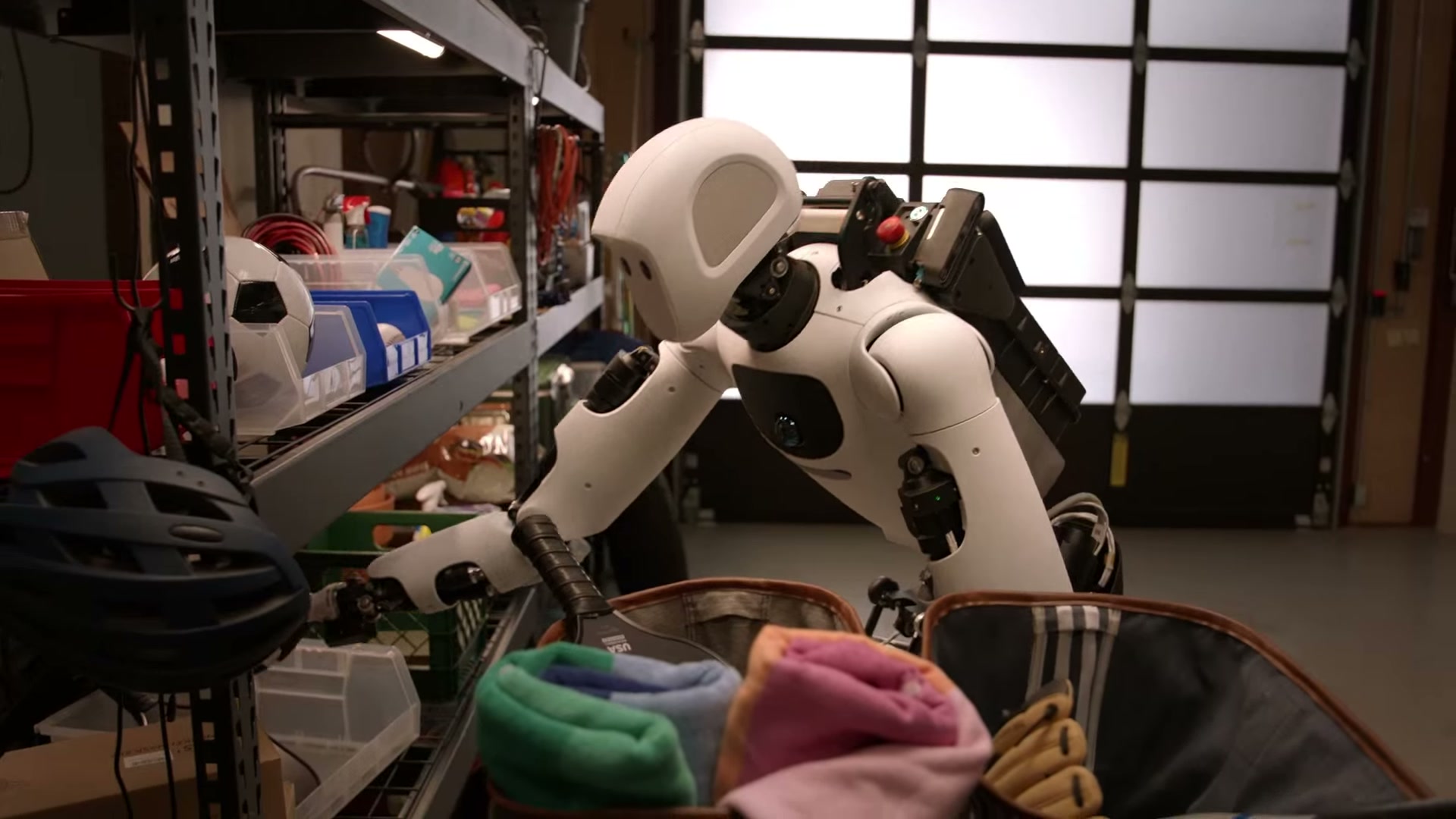
The company shows the same model checkpoint running on several embodiments, including an Apptronik Apollo humanoid and a Franka Duo two-arm platform. The demo frames robot adaptation as a software problem, not only a new hardware build.
What the demonstration shows
Gemini Robotics ER 2 can track a task over minutes, coordinate robots and recover when a step fails. Google says its on-device model can adapt to a new bi-arm robot with a few hours of data, often fewer than 200 examples.
The demonstrations also reveal real limits. Google’s published results show multi-finger tasks remain uneven: some actions perform well while others, such as tying a trash bag, are much harder.
Why it matters
The stack is still in research and partner access. A choreographed task does not establish safe operation in arbitrary homes or workplaces, but it demonstrates the pieces needed for longer-horizon robot work.
The important change is the planner’s role: a robot can reason about what should happen next while another model handles the exact motor commands.
What to watch
A useful division of labor is emerging: a high-level model interprets the goal and decides the next step, while a vision-language-action model translates that plan into movement. Separating planning from control lets teams change the robot body without rebuilding every part of the reasoning system.
Google’s own task scores show why the demo should be read as progress rather than a finished household robot. The next milestone is dependable performance across new rooms and objects, with safe pauses when the robot is unsure and clear evidence for each completed step.
Source published 2026-07-30. Coverage is based on the maker’s announcement and demonstration.