The practical change
Google says Gemini Omni 1.1 Flash is now available in Google Vids, its browser-based video editor. A Google account is enough to start creating videos at no cost. The new creation flow can take a text prompt, image or audio input and produce an HD clip, with 1080p output offered as an option. This makes the first draft and the edit part of one workflow.
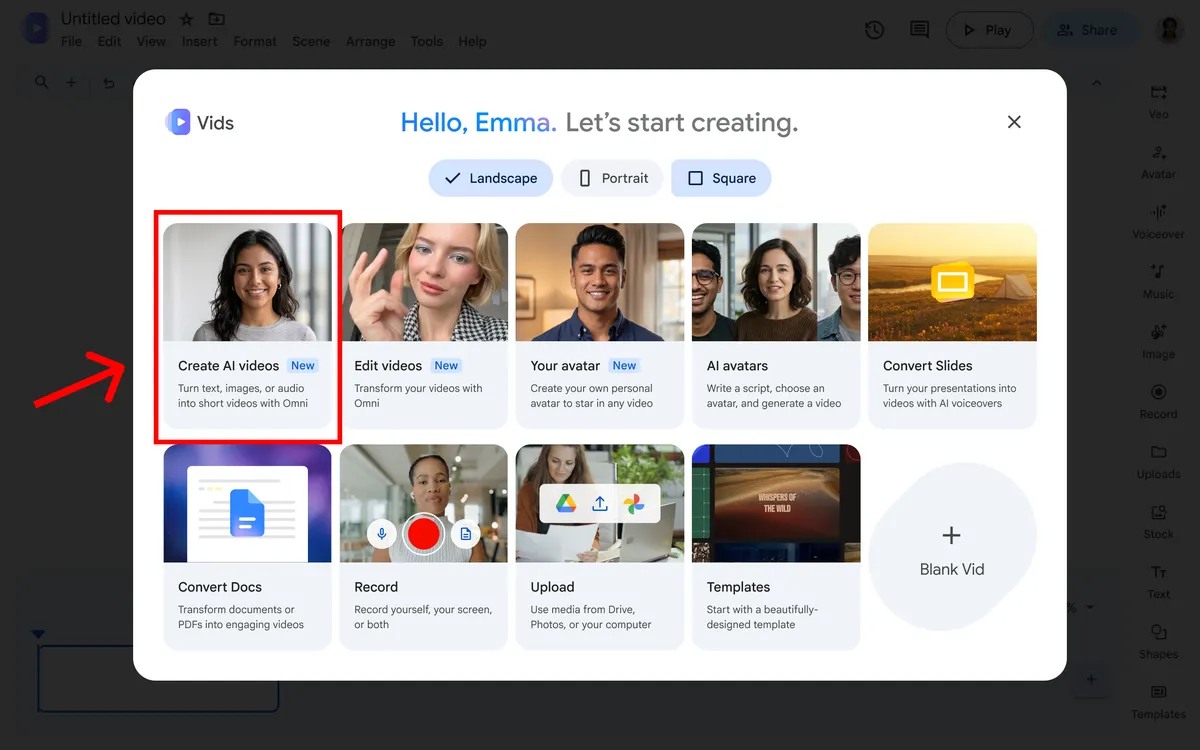
The Vids screen lets users choose a format before generating, including landscape, portrait and square. From there, people can use the editor to arrange scenes, add titles or combine generated footage with other material. It is a clearer path from idea to finished video than downloading disconnected clips and rebuilding them in another tool.
What Omni adds
Google highlights scene extensions and control over video duration, both useful when a generated moment ends before a story beat lands. Omni 1.1 Flash can create or transform scenes, while Vids provides templates and editing controls around the result. Google says generated clips carry SynthID watermarks.
The launch should not be read as a promise of unlimited free generations. Accounts, feature access and usage limits can vary; what Google explicitly states is that anyone with a Google account can create in Vids for free. Output quality still depends on the prompt, source material and the edit a person makes afterward.
Why this matters to creators
A 1080p option is meaningful because video shared across social platforms and embedded on sites needs to look presentable beyond a tiny preview. Portrait and square formats reduce the extra crop-and-reframe step for short-form publishing. Scene extension can rescue a good generation that stops too soon.
The next useful test is a complete post: generate a specific scene, extend it, add context and export the cut. If that takes minutes rather than a chain of specialist tools, the competitive shift is the workflow, not merely another model name. The source image here shows the actual Vids creation interface.
Source published 2026-09-23. Coverage is based on the maker’s announcement and demonstration.