The sketch is the brief
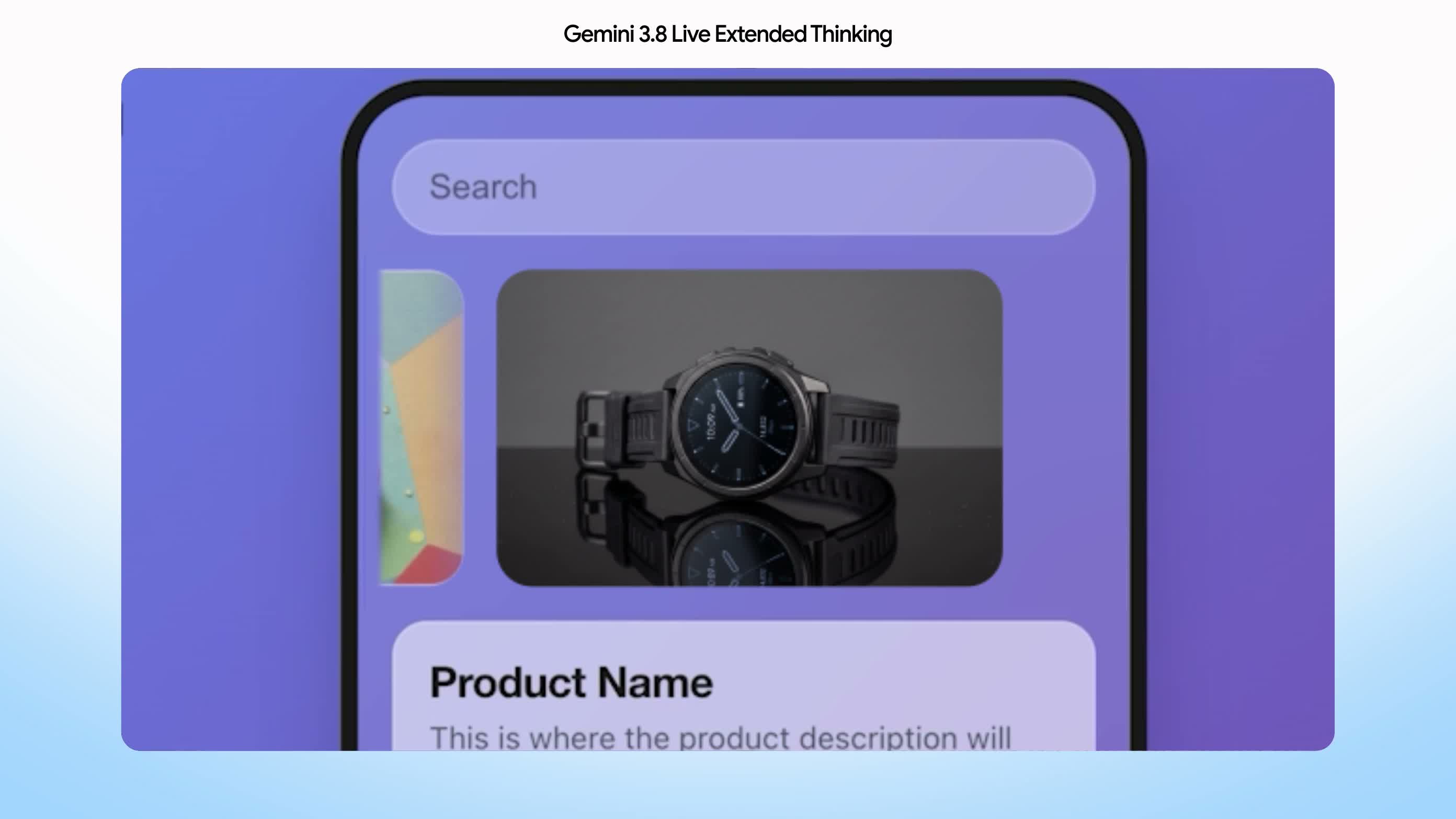
Google’s Gemini 3.8 Live Extended Thinking example uses a hand-drawn interface and voice feedback to create React components. It is a useful way to picture a design conversation: point at the idea, describe what should change, and inspect the result.
The company labels the demonstration as shortened sequences with simulated screen imagery. Treat it as an illustration of the workflow rather than an unedited performance test.
The important moment is a revision
A first draft can hide misunderstandings. The more revealing test is a follow-up change: move a control, alter what a card displays, or explain a behavior that the drawing did not capture.
Keep the change specific. Instead of asking for a better page, say what should happen when a user taps the card, which content must remain visible and what should stay unchanged. That gives you a result you can compare against the request.
Conversation and completion are different
Google says the Live models can execute tools in the background while continuing to talk. Extended Thinking adds deeper reasoning alongside speech. Developer access is through the Gemini API and AI Studio; consumer rollout and product availability vary.
A useful interface should make task completion visible. Hearing an acknowledgment is different from seeing the requested update saved and working. For an experiment, inspect the generated component, try its controls and note where another correction was needed.
Source published 2026-09-15. Coverage is based on the maker’s announcement and demonstration.