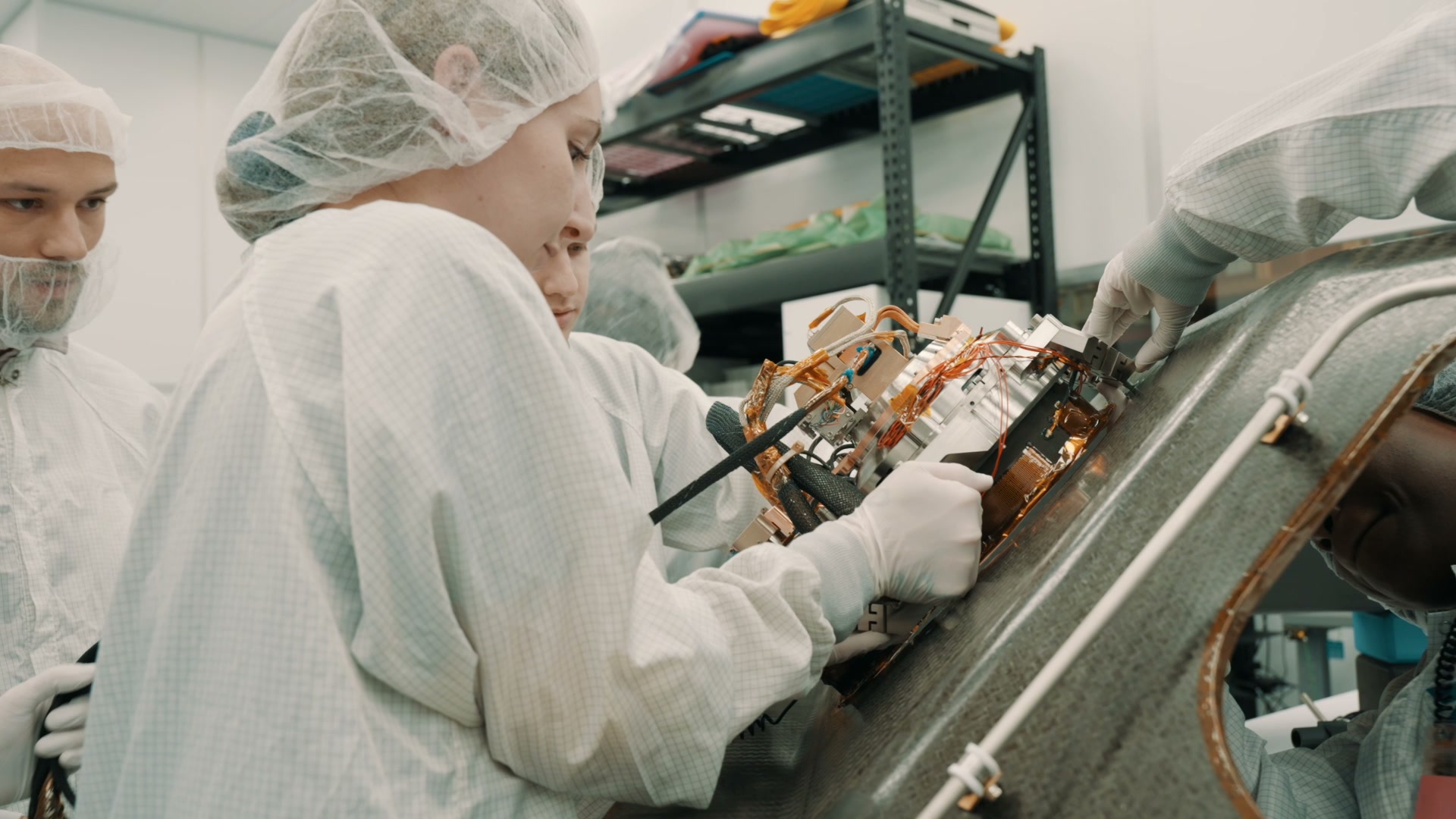
Move the processing closer to the camera
Firefly’s Ocula lunar imaging service is planned to use NVIDIA Jetson with its SciTec software onboard the Elytra spacecraft. Instead of relying entirely on Earth to process imagery, the system would analyze data in lunar orbit and transmit useful results.
The April announcement says Blue Ghost Mission 2 is targeted no earlier than late 2026. The hardware footage shows preparation on the ground. It is not evidence that this processing service is already operating around the Moon.
Why the radio link matters
A camera and a communications link do different jobs. Collecting a detailed image does not mean a spacecraft can immediately send every detail home. Processing near the sensor can help decide which information needs transmission first.
That is the practical appeal of this design: use onboard computation to make a limited link more useful. It also changes what needs validation. The important question becomes whether the selected results preserve what a customer needs, rather than simply how much data a camera can capture.
What would make it useful
Firefly lists lunar mapping and mineral detection among the intended applications. Our view: mission demonstrations showing the original imagery, the onboard result and the time to delivery would be particularly revealing. Those comparisons would make the value of processing in space easier to judge than a processor specification alone. For now, this is a documented mission plan.
Source published 2026-04-08. Coverage is based on the maker’s announcement and demonstration.