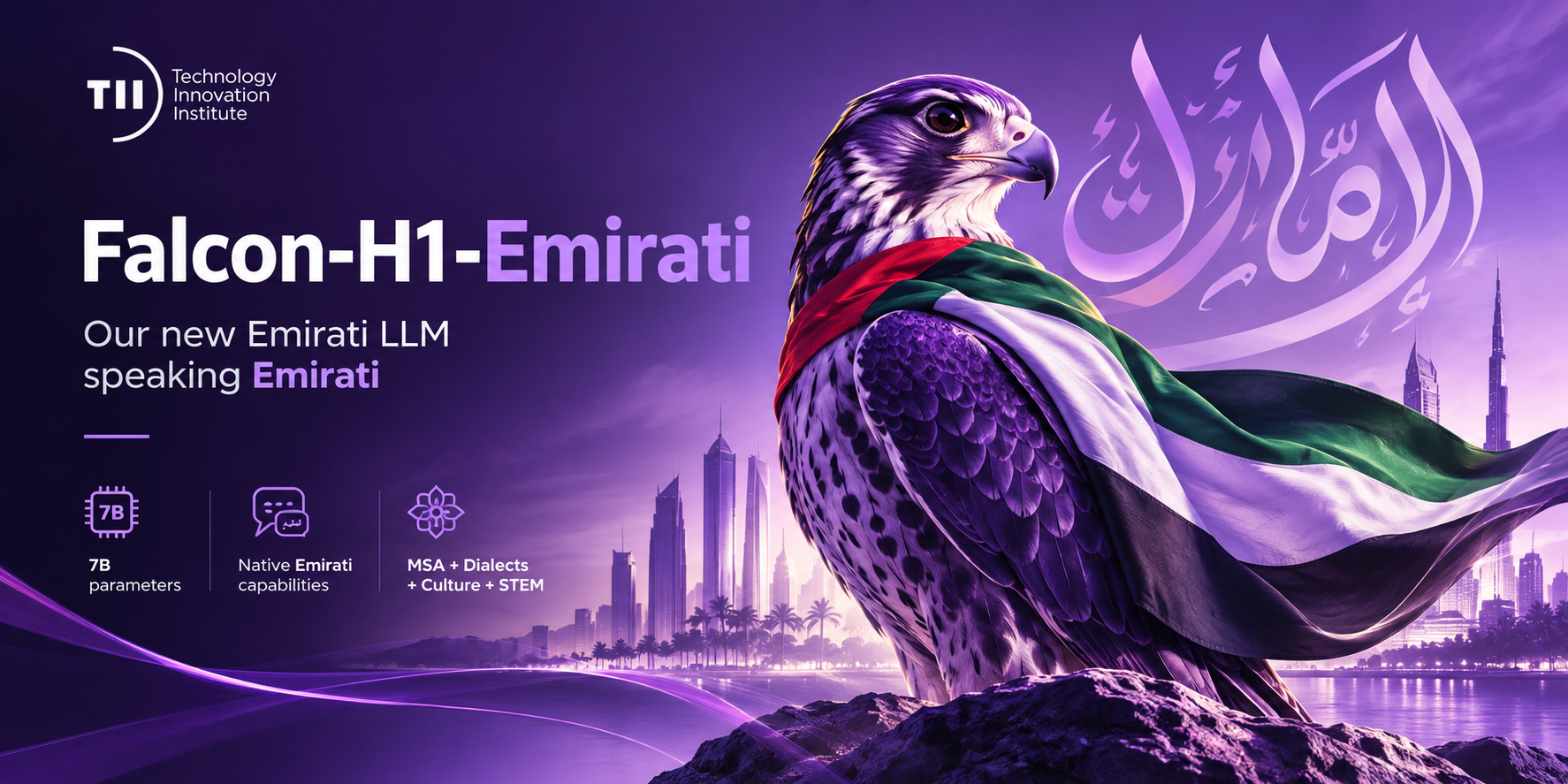
A language model tuned for place
The Technology Innovation Institute introduced Falcon-Emirati on October 6, describing a model intended to handle the dialect, culture and nuance of Emirati Arabic. That focus matters because a model’s ability to generate standard Arabic does not automatically mean it will understand local expressions, social context or the way people address one another.
The announcement treats localization as more than swapping vocabulary. It centers dialect and cultural nuance as part of model capability. TII’s public post is the primary source for the release; it does not provide a reason to claim that the model now understands every Emirati speaker or situation.
Why local evaluation matters
A useful local-language model needs tests written for the way people in that community communicate. Literal translation can miss politeness, implied meaning and region-specific phrasing. A model can produce fluent text while misunderstanding the intent of a short message.
TII has previously published Emirati-language evaluation work, including the Alyah benchmark. That makes a dedicated model and community-specific evaluation a meaningful pairing: one describes the system, the other helps make its performance inspectable.
A broader AI shift
For years, the most visible model releases optimized for broad English-language use. Falcon-Emirati is an example of a different question: can a model better serve a particular linguistic and cultural setting?
The important next evidence will be transparent evaluations, examples from native speakers and clear information about access. The release is a meaningful direction for Arabic AI; its announcement alone is not a substitute for independent measurement.
Source published October 6, 2026. Coverage is based on the maker’s announcement and demonstration.