The discovery
Anthropic says its Claude agents identified a previously uncharacterized enzyme system in bacteriophages, the viruses that infect bacteria. The underlying reverse transcriptase was known, but the agents noticed an associated array of repeating DNA and a neighboring partner protein that had not been recognized together as a system. The company calls it an array-associated reverse transcriptase, or ART.
A reverse transcriptase copies RNA into DNA. The intriguing part is the neighboring repeat array: its layout resembles CRISPR arrays, which help make some biological systems programmable. That resemblance is a research clue, not evidence that ART already performs gene editing. Anthropic says the biological function is still unknown.
How the search worked
The researchers gave Claude a broad prompt to find interesting reverse transcriptases in a large DNA database. Around 950 agents worked for 21 hours using 210 million tokens. They gathered more than 200,000 RTs, identified about 3,500 candidate systems and narrowed them to 20 reports for deeper analysis. One agent noticed the repeat pattern next to an unusual RT and investigated its spacing and prior literature.
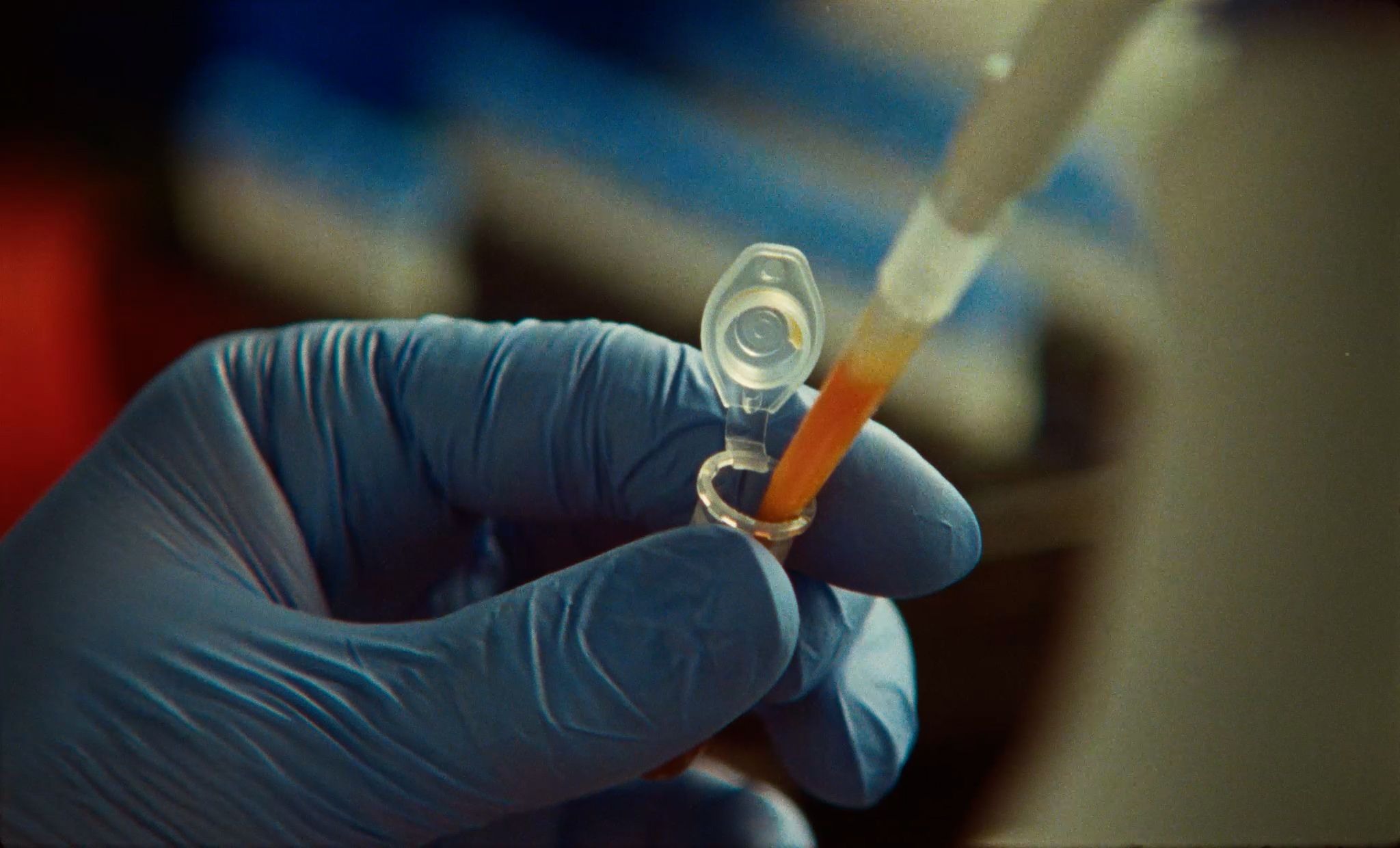
Human scientists then reviewed the report and tested the candidate in their lab. Anthropic says early experiments show the ART array is expressed as distinct short RNAs, a further reason to study it. The laboratory work was done by people; Claude’s contribution was searching, recognizing an anomaly and developing the initial case for follow-up.
Why this changes the research workflow
The striking result is not a ready medicine. It is a way to sift immense biological datasets for connections that may be too time-consuming for a small team to inspect manually. A useful AI scientist must generate leads that survive independent experiments, not merely plausible descriptions.
Anthropic has released a preprint so other researchers can examine the evidence. The next step is to determine what ART does, whether the system can be reproduced across labs and whether its unusual components have practical uses. For now, it is a concrete example of AI accelerating hypothesis generation while human experiments establish the biology.
Source published 2026-09-23. Coverage is based on the maker’s announcement and demonstration.