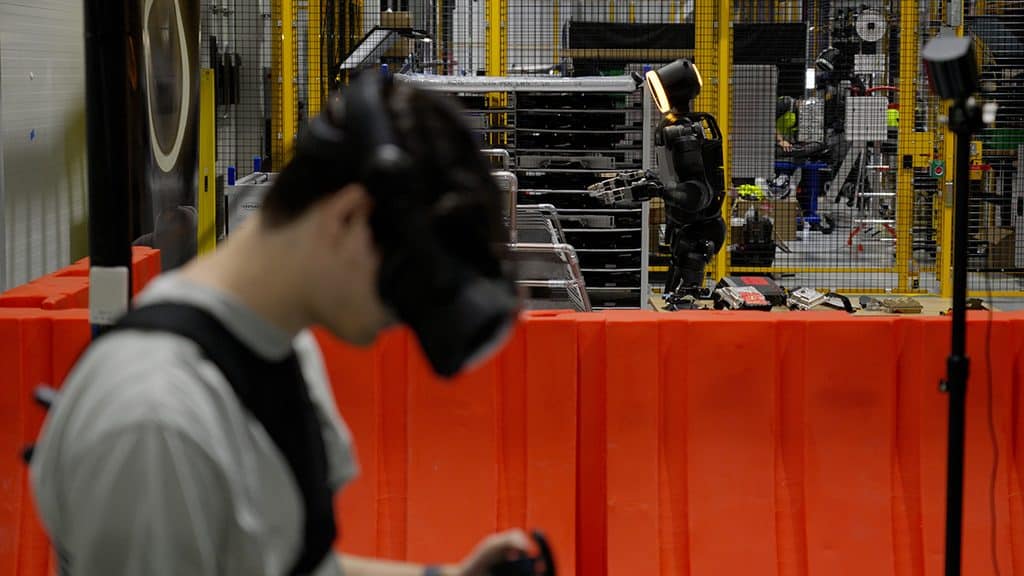
A training floor inside an automaker’s operation
Boston Dynamics says it has opened its first Robotics Metaplant Application Center at Hyundai’s Georgia facility. The space is designed to train humanoid robots on manufacturing work in a setting connected to the plants where those tasks may eventually happen.
The first announced application is parts logistics: Atlas is being trained to prepare automotive components, put them into the correct sequence and place them where the next step needs them. That is a practical factory job, rather than a staged household demonstration.
The work is still training, not a full rollout
The announcement describes Atlas learning and rehearsing tasks at the new center. It does not say that a fleet of Atlas robots is already carrying out the work across Hyundai’s factories. Manufacturing tasks require consistent handling, safe collaboration and integration with existing systems.
Boston Dynamics and Hyundai have also outlined future ambitions. Hyundai plans to extend applications toward component assembly by 2030 and has discussed deploying as many as 25,000 Atlas units across Hyundai and Kia plants over several years. Those figures are plans and targets, not current installed capacity.
Why the training location matters
Training at an automotive site can expose robots to the actual parts, constraints and handoffs that matter on a production line. A robot that can move a single object in a lab still has to work around bins, fixtures, people and changing schedules in a plant.
The center creates a place to test those integrations before claiming wide use. Hyundai also describes future manufacturing capacity of up to 30,000 robots per year; that is a production target and should not be confused with robots already built or operating.
What to watch next
The most meaningful milestones will be the tasks Atlas can complete repeatedly, how much human supervision each one needs, and whether the work stays reliable over long shifts. Parts sequencing is a measurable starting point because each item must arrive at a specific place in the process.
The public announcement is an early sign that humanoid robotics is moving from isolated demonstrations toward factory-specific training programs. The evidence today is the training site and the selected workflow; broader factory use remains a future step.
Source published 2026-09-21. Coverage is based on the maker’s announcement and demonstration.